
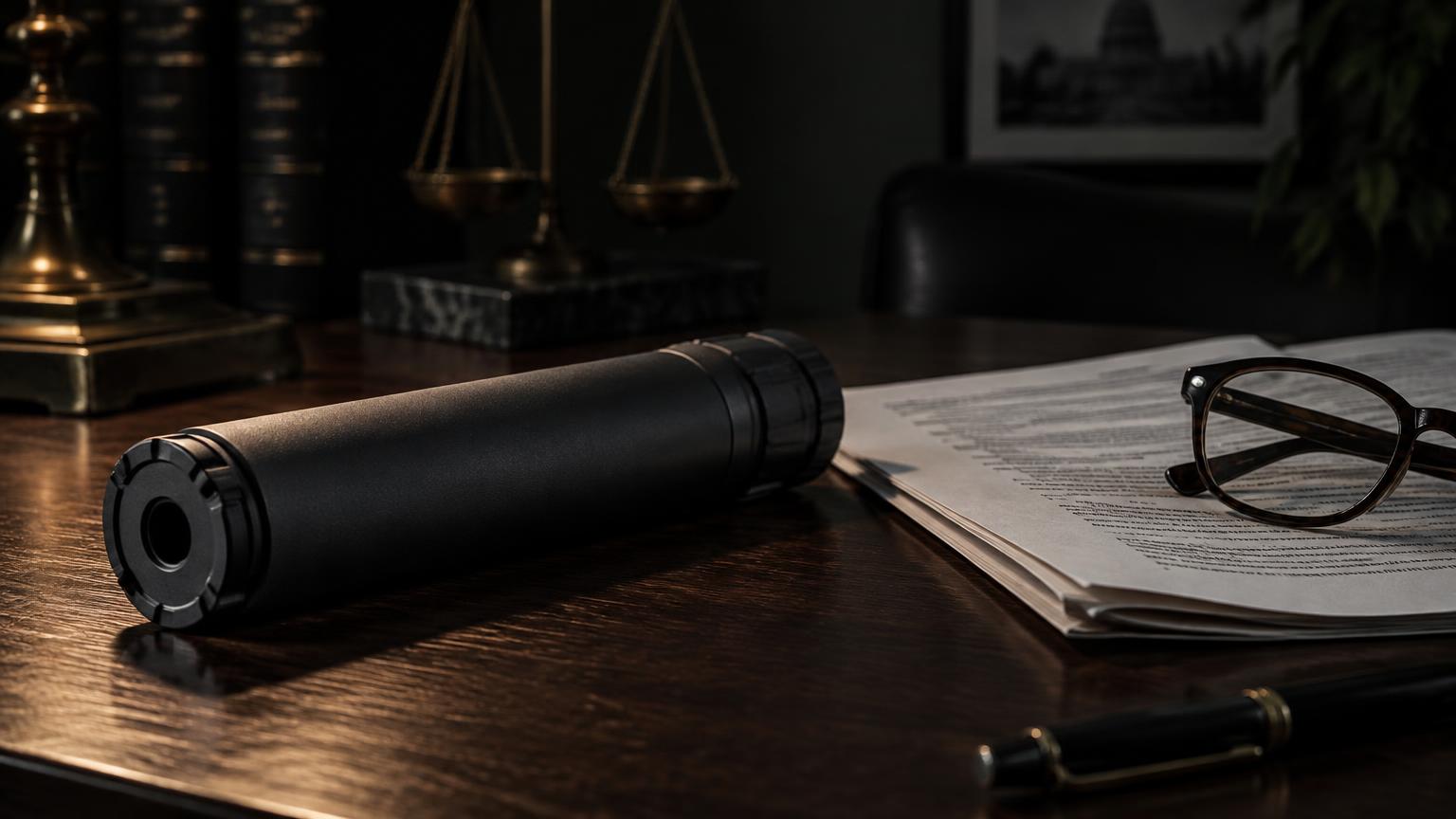
For decades, suppressors and short-barreled rifles (SBRs) have been subject to additional federal requirements under the National Firearms Act (NFA). Those requirements historically included a federal tax, an application and approval process, and registration obligations.
In 2025, Congress passed the One Big Beautiful Bill Act, reducing the federal making and transfer tax on suppressors, SBRs, short-barreled shotguns, and certain other weapons to $0 beginning January 1, 2026.
A separate development followed on October 9, 2026, when the Bureau of Alcohol, Tobacco, Firearms and Explosives (ATF) announced a federal enforcement policy concerning specified NFA requirements for those categories.
These developments may affect how some people evaluate equipment, costs, and legal obligations. But they do not amount to a repeal of the NFA, and they do not guarantee that every covered firearm or configuration is lawful in every state.
For anyone considering firearm ownership as part of a broader preparedness plan, understanding the distinction between the law and the agency's current enforcement policy is essential.
What Changed in 2026?
Two separate developments are important.
The Federal Tax Was Reduced to $0
The One Big Beautiful Bill Act reduced the federal making and transfer tax to $0 for specified categories of NFA firearms, effective January 1, 2026.
These categories include:
- Suppressors: Devices designed to reduce the sound of a firearm's discharge.
- Short-barreled rifles (SBRs): Rifles meeting the applicable federal definition.
- Short-barreled shotguns (SBSs): Shotguns meeting the applicable statutory definition.
- Certain other weapons (AOWs): A specific category defined under federal law.
The former federal tax no longer applies to covered transactions under the amended tax provisions. The previous tax was not identical for every category, so do not assume every item was previously subject to a $200 tax.
Machine guns and destructive devices remain subject to applicable NFA requirements and taxes.
Importantly, the tax change alone did not eliminate other NFA requirements.
The ATF Announced a Federal Enforcement Policy
On October 9, 2026, the ATF announced that it would no longer enforce specified federal NFA requirements for covered suppressors, SBRs, SBSs, and AOWs.
The guidance followed the August 5, 2026, federal district court decision in Silencer Shop Foundation v. ATF, in the Northern District of Texas.
The court's injunction applies to specified plaintiffs and related parties rather than automatically binding every court or person nationwide. The ATF separately announced a broader nationwide nonenforcement policy.
That distinction matters. Congress changed the statutory tax, while the ATF announced a policy concerning enforcement of certain other requirements. The NFA remains on the books.
For the current agency position, consult the ATF's official NFA transfer guidance.
Important: This Is an Enforcement Policy, Not a Guarantee
As of October 20, 2026, the ATF says it will not enforce specified NFA requirements for covered items under its announced policy. That does not mean the legal landscape is settled permanently.
The ATF warns that its policy could change if circumstances change, including if the injunction is reversed or the relevant tax framework changes. The agency also warns that unregistered NFA items may carry serious criminal consequences under applicable law if enforcement resumes.
Federal law does not generally provide automatic grandfathering or routine later registration for unregistered NFA items. Any amnesty would depend on applicable legal authority and should not be assumed to be available.
State law creates additional uncertainty. A federal enforcement policy does not override state or local prohibitions, and the ATF cautions that federal nonenforcement does not settle whether possession satisfies a state's own legal requirements.
Before acquiring, making, modifying, or transporting a covered firearm, verify the current federal guidance and the laws in every relevant state. Consider consulting a qualified firearms attorney when the answer is unclear.
What Does This Mean for Preparedness?
Preparedness is about understanding risks, choosing equipment for a real purpose, and maintaining the skills and resources needed to use it responsibly. These developments may change some equipment decisions, but they do not make every purchase necessary or appropriate.
Suppressors and Hearing Protection
Suppressors reduce the sound of a firearm's discharge, but they do not make firearms silent. Depending on the firearm, ammunition, and suppressor, sound levels can remain high enough to cause hearing damage.
For people who lawfully participate in recreational shooting, hunting, or range training, sound reduction may be a consideration. Reduced noise can also make communication during training more manageable.
However, suppressors are not a replacement for hearing protection, safe firearm handling, or appropriate training. State restrictions and hunting regulations may also apply.
Short-Barreled Rifles and Equipment Choices
An SBR is a rifle meeting the applicable federal definition based on barrel length or overall configuration. The precise classification matters, and not every firearm with a short barrel falls into the same legal category.
Some firearm owners value compact configurations for storage, transport, or use in confined environments. Others may find a conventional rifle more suitable for their needs.
The federal enforcement policy may affect the administrative and legal considerations surrounding covered configurations, but it does not make every configuration lawful everywhere.
Before changing an existing firearm or acquiring a newly configured one, verify the classification and applicable laws. Do not rely on a general news summary to determine whether a specific configuration is lawful.
Cost Is Only One Part of the Decision
The $0 federal tax changes the financial calculation for covered items, and the enforcement policy may reduce certain federal administrative barriers.
But ownership still involves costs such as the equipment itself, secure storage, compatible accessories, maintenance, ammunition, and training.
For a broader preparedness plan, firearms are only one consideration among many. Reliable lighting, water storage and filtration, first-aid supplies, emergency communications, food, power, and evacuation planning can be more immediately relevant to common disruptions.
The right priorities depend on the risks you face, your circumstances, and the resources you already have.
What Has Not Changed?
State and Local Laws Still Apply
Some states and local jurisdictions prohibit or restrict suppressors, SBRs, SBSs, or other covered items. The ATF's federal policy does not cancel those restrictions.
Do not assume that federal nonenforcement guarantees lawful possession under state law.
Other Federal Firearm Laws Remain in Effect
Applicable provisions of the Gun Control Act continue to apply. Federal prohibitions on possession by prohibited persons remain in force, and licensed dealers must continue to comply with applicable licensing, transaction-record, Form 4473, and background-check requirements.
The policy should not be interpreted as removing all requirements for acquiring or transferring firearms.
Other NFA Categories Remain Regulated
Machine guns and destructive devices remain subject to applicable NFA restrictions and taxes. Changes affecting suppressors and certain other categories should not be generalized to every item regulated under the NFA.
Interstate Travel Requires Care
Travel rules can differ by firearm category and jurisdiction. ATF guidance addresses interstate transportation requirements for SBRs and SBSs, including Form 5320.20 where applicable.
Before traveling across state lines with a covered item, verify the current federal requirements and the laws of the states involved. Do not assume that the rules for one category automatically apply to another.
The Policy Could Change
Court decisions, agency guidance, and legislative changes can alter the legal landscape. A policy that applies today may not remain in effect indefinitely.
This uncertainty is especially important for decisions involving unregistered items or changes to an existing firearm's configuration.
A Practical Checklist
Before making a firearm-related decision based on these developments:
- Check the current ATF guidance. Read the agency's published policy rather than relying solely on social media, headlines, or retailer summaries.
- Verify state and local laws. Confirm the rules that apply where you live and any locations where you plan to travel.
- Identify the exact firearm category. Barrel length, overall configuration, and other characteristics may affect legal classification.
- Check transport requirements. Confirm whether prior approval or other documentation applies before interstate travel.
- Maintain safe storage and handling. Keep firearms secured against unauthorized access and follow established safety practices.
- Consider the risk of policy changes. Do not assume that today's enforcement policy guarantees tomorrow's legal position.
- Seek qualified legal advice if necessary. Before acquiring, making, or modifying a firearm under uncertain rules, consult a qualified firearms attorney.
The Bottom Line
The federal tax change and the ATF's October 2026 enforcement policy are separate developments with potentially significant consequences for suppressors, SBRs, SBSs, and certain other covered weapons.
For preparedness, the important takeaway is not that everyone should buy new equipment. It is that federal policy can change the choices available to responsible firearm owners, while legal obligations and uncertainty remain.
A useful preparedness plan is built around realistic risks, reliable equipment, sound judgment, and a clear understanding of the rules that apply.
Prepare deliberately. Verify the law. Make decisions based on your actual needs, not headlines.
Related Reading
Sources & Further Reading
Disclaimer: This article is for informational and educational purposes only and is not legal advice. Federal, state, and local firearm laws and agency policies can change. Verify current requirements with the relevant authorities or a qualified attorney before acting.