
Canned tuna
Lean, compact protein to eat straight from the can or add to familiar meals.
Quality window: USDA category guidance: about 2–5 years unopened, stored cool and dry with an intact can.
View productApocalypse Warehouse Buying Guide
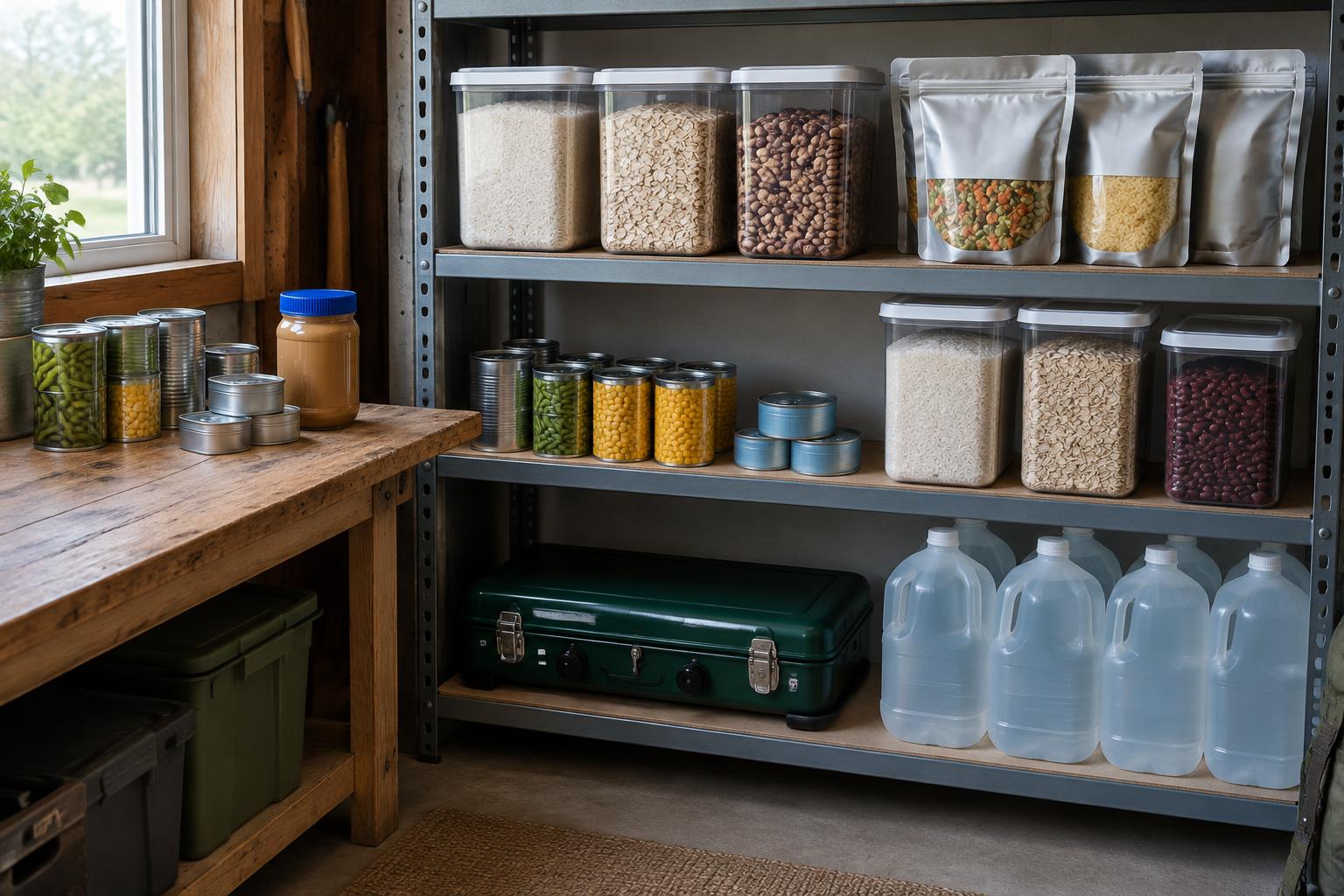
A good emergency food supply doesn’t need to be complicated or expensive. Start with ordinary foods your household already eats, prioritize foods with a long shelf life, and build your supply over time.
The goal is to have food available when grocery stores are closed, supply chains are disrupted, or cooking options are limited.
Affiliate disclosure: As an Amazon Associate, Apocalypse Warehouse earns from qualifying purchases. Shopping links may be affiliate links. Recommendations do not depend on commissions.
Shelf-life estimates are approximate quality guidance, not guaranteed expiration dates. Follow the actual label and storage instructions. Choose shelf-stable cans—not products labeled “Keep Refrigerated.”
Canned proteins and beans are a practical no-cook foundation.
Lean, compact protein to eat straight from the can or add to familiar meals.
Quality window: USDA category guidance: about 2–5 years unopened, stored cool and dry with an intact can.
View productA versatile addition to rice, pasta, soups, and wraps.
Quality window: USDA category guidance: about 2–5 years unopened, stored cool and dry with an intact can.
View productShelf-stable canned beef adds ready-to-eat protein and variety; avoid products labeled Keep Refrigerated.
Quality window: USDA category guidance: about 2–5 years unopened, stored cool and dry with an intact can.
View productReady-to-eat pork with ham adds calories and protein to meals.
View productCanned beans provide ready-to-eat protein and fiber without a long cooking time.
Quality window: USDA category guidance: about 2–5 years unopened, stored cool and dry with an intact can.
View productAffordable ingredients for familiar meals; budget water and cooking fuel.
An affordable meal base that stores well when packaged correctly; needs water and cooking.
View productA familiar, inexpensive staple for simple meals with canned proteins or vegetables.
View productA versatile breakfast staple; follow preparation directions and budget water.
View productDried beans supply protein and carbohydrates, but need water, time, and thorough cooking.
View productFlour supports familiar baking and cooking when you have the equipment and fuel; never eat it raw.
View productAdd variety, useful ingredients, and energy—not just protein.
Canned vegetables add ready-to-eat variety when fresh produce is unavailable.
Quality window: USDA category guidance: about 2–5 years unopened, stored cool and dry with an intact can.
View productCanned fruit adds familiar flavor and variety without refrigeration before opening.
Quality window: USDA high-acid canned-food guidance: about 12–18 months unopened under proper storage.
View productA no-cook source of energy and protein; choose an alternative if your household has peanut allergies.
View productCooking oil adds energy and helps prepare familiar meals; rotate it before quality declines.
View productPowdered milk is useful for familiar recipes; plan safe water and refrigeration after mixing.
View productSimple seasonings and sweeteners round out everyday meals.
Salt is useful for seasoning and traditional meat preservation, but curing requires the appropriate salt, precise ratios, and safe, tested curing practices. Simply covering meat in ordinary table salt does not make it safe to store indefinitely.
Dry staples like white rice and beans can benefit from longer-term storage when packaged correctly. Mylar provides a barrier, suitable oxygen absorbers reduce oxygen, and food-grade buckets protect sealed packages from damage and pests.
Protect suitable dry foods from light and moisture when sealed correctly. Pair with appropriately sized oxygen absorbers only where suitable.
View productUse with suitable low-moisture foods and compatible sealed packaging. They do not make moist foods safe at room temperature.
View productSecondary protection for packaged dry foods from physical damage and pests; keep packaging intact.
View productFood-safe containers protect ordinary pantry supplies from moisture and pests.
View productNot every food needs Mylar or oxygen absorbers. Do not use oxygen absorbers with foods that require refrigeration or contain significant moisture or fat. Reduced-oxygen packaging is not a way to make perishable food shelf-stable.
Store food in a cool, dry, dark location and rotate ordinary pantry supplies. Discard bulging, leaking, badly rusted, or deeply dented cans. Food is not necessarily safe because it looks or smells normal; never taste questionable food to test it.
Primary recommendation: Coleman Classic 2-Burner Propane Stove. Pair it with compatible 1 lb cylinders, a basic pot with lid, a lighter, a manual can opener, and a cooking utensil. Follow the actual stove manual for fuel compatibility and operation.
Two independently adjustable burners let you boil water and heat food simultaneously. Portable backup cooking for rice, pasta, oats, canned meals, and freeze-dried meals.
View productUse only the cylinder type specified by your actual stove manual. The Classic manufacturer listing specifies a 16.4 oz cylinder; commonly sold as approximately 1 lb. No large tank or conversion hose is part of this setup.
View productA simple pot lets you heat meals and boil preparation water outdoors.
View productKeep a reliable ignition source for the stove, following its manual.
View productOpen canned meals without electricity.
View productA heat-safe spoon or spatula keeps meal preparation straightforward.
View productMREs are ready to eat; heating is optional. Mountain House freeze-dried meals and other commercially packaged emergency meals offer convenience, but freeze-dried meals generally require water and often heat. Check each package’s preparation directions.
Ready-to-eat meal components are heavier and bulkier than dry pouches. Shelf life depends strongly on temperature; use actual manufacturer or DLA guidance.
View productIndividual pouches and assortments offer just-add-water meals. Qualifying products carry a manufacturer 30-Year Taste Guarantee; follow the exact package.
View productBuckets and individual meals can simplify purchasing a varied assortment. Check the exact contents and preparation directions.
View productUse these meals to supplement—not replace—a normal pantry. They are convenient when normal cooking is unavailable only if you can meet their preparation needs.
A basic emergency supply for a short disruption. Begin with familiar no-cook foods.
A more meaningful reserve of familiar pantry foods, with a workable water and cooking plan.
A deeper reserve for prolonged disruptions, built around food rotation and replenishment.
Quantities depend on household size, calorie needs, dietary restrictions, and water availability. Start with 72 hours and build gradually; these targets are durations, not exact household shopping quantities.
Keep at least one gallon of water per person per day for drinking and basic needs, with more for cooking, heat, illness, and pets. Plan your water supply.
Start with the food you already eat. Add canned proteins, grains, beans, and basic staples. Store dry goods properly, keep enough water, and have a simple backup cooking plan. Build your supply gradually instead of trying to buy everything at once.