
In the Field: Osprey Farpoint 40
The backpack I've trusted from North African deserts to motorcycle trips along Spain's Mediterranean coast — and why I'd trust it in an emergency.
Buy the Farpoint 40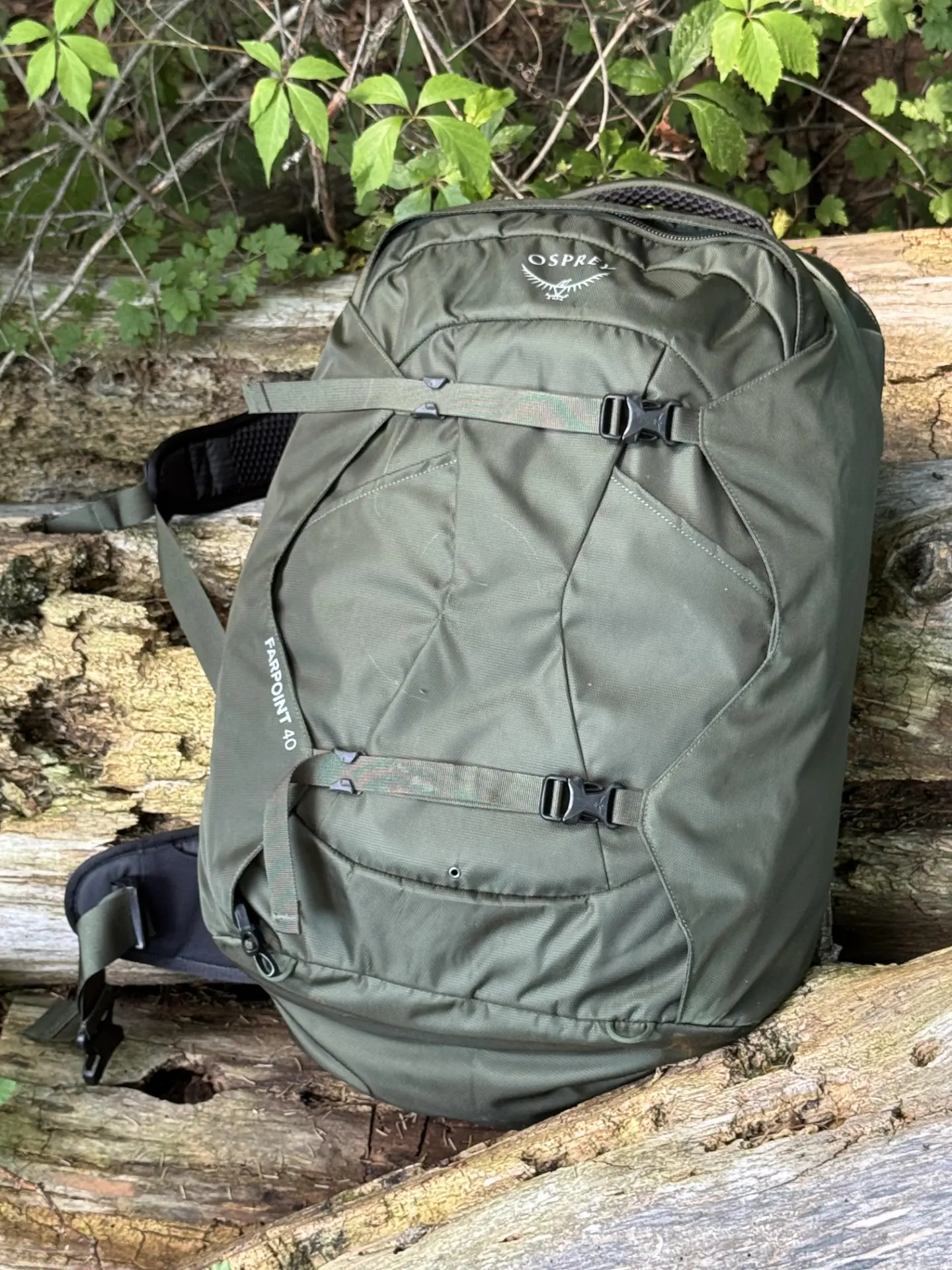
This review is based on years of ownership and real-world travel, including:
- Crossing the Sahara Desert by camel
- Exploring Tunisia
- Motorcycle touring from Barcelona down Spain's Mediterranean coast
- Camping throughout the forests of northern Wisconsin
- Countless flights, airports, train stations, hotels, hostels, and campsites
These experiences shaped every opinion in this review.
The best preparedness gear isn't always bought for emergencies.
Sometimes it's simply the gear you've trusted enough to take everywhere.
Long before I ever thought about bug-out bags, the Osprey Farpoint 40 had already crossed deserts, forests, airports, and hundreds of miles strapped to the back of a motorcycle.
After years of ownership, it's become one of the few pieces of gear I'd replace immediately if it disappeared tomorrow.
Photo Gallery
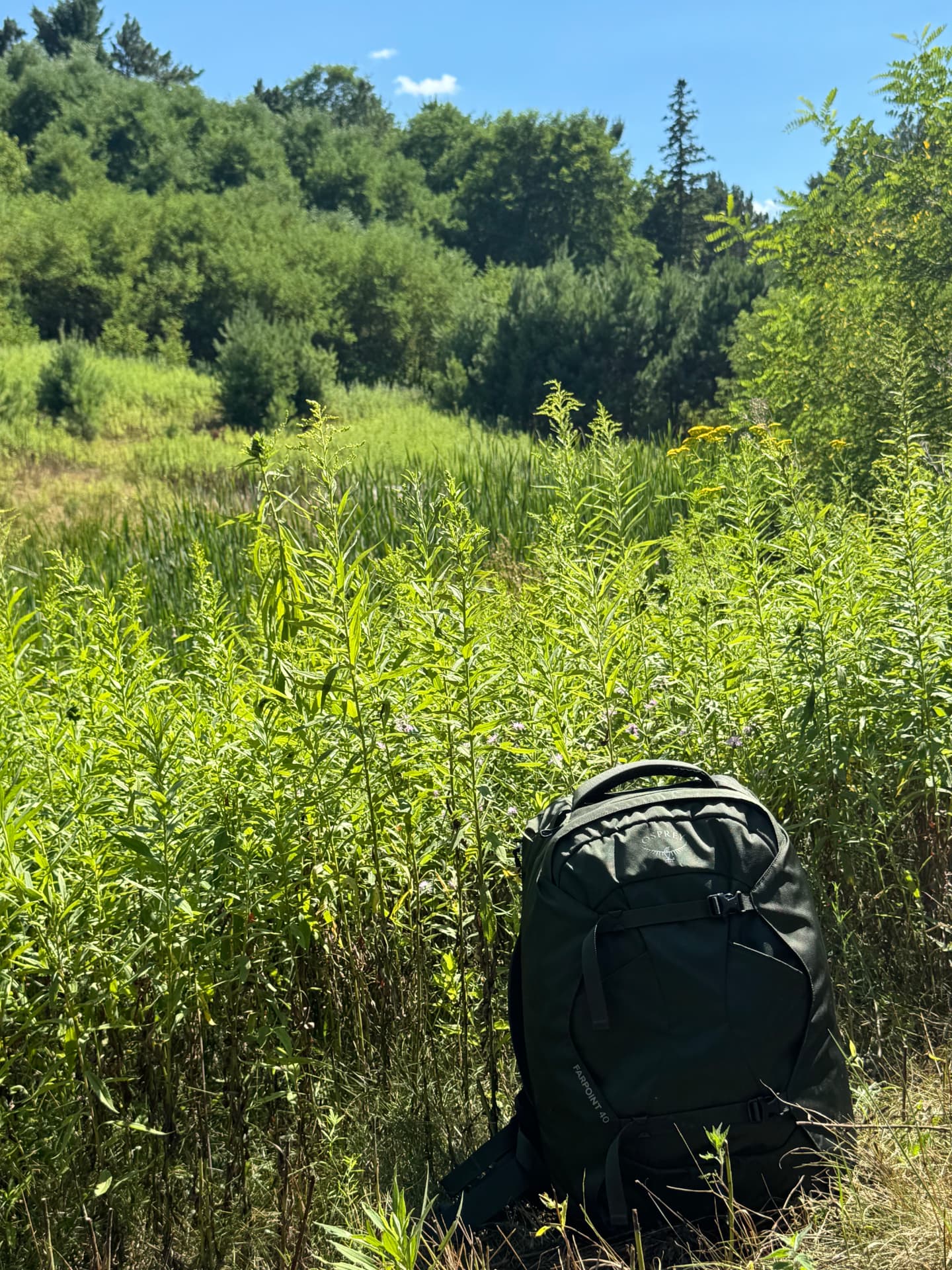
Up for any task whether it's a hike, bug out bag or a carry-on
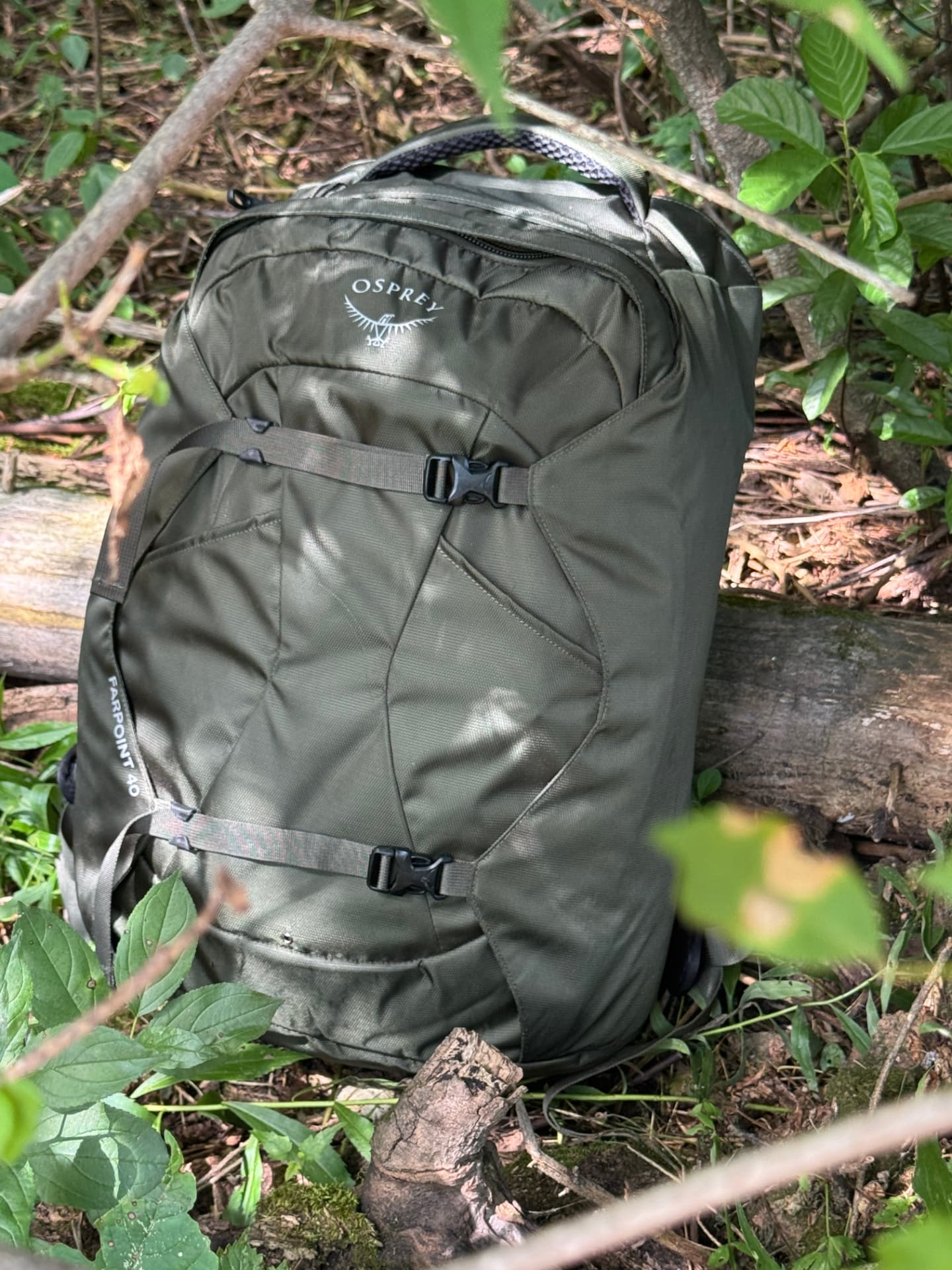
The reasonable size allows for easy handling
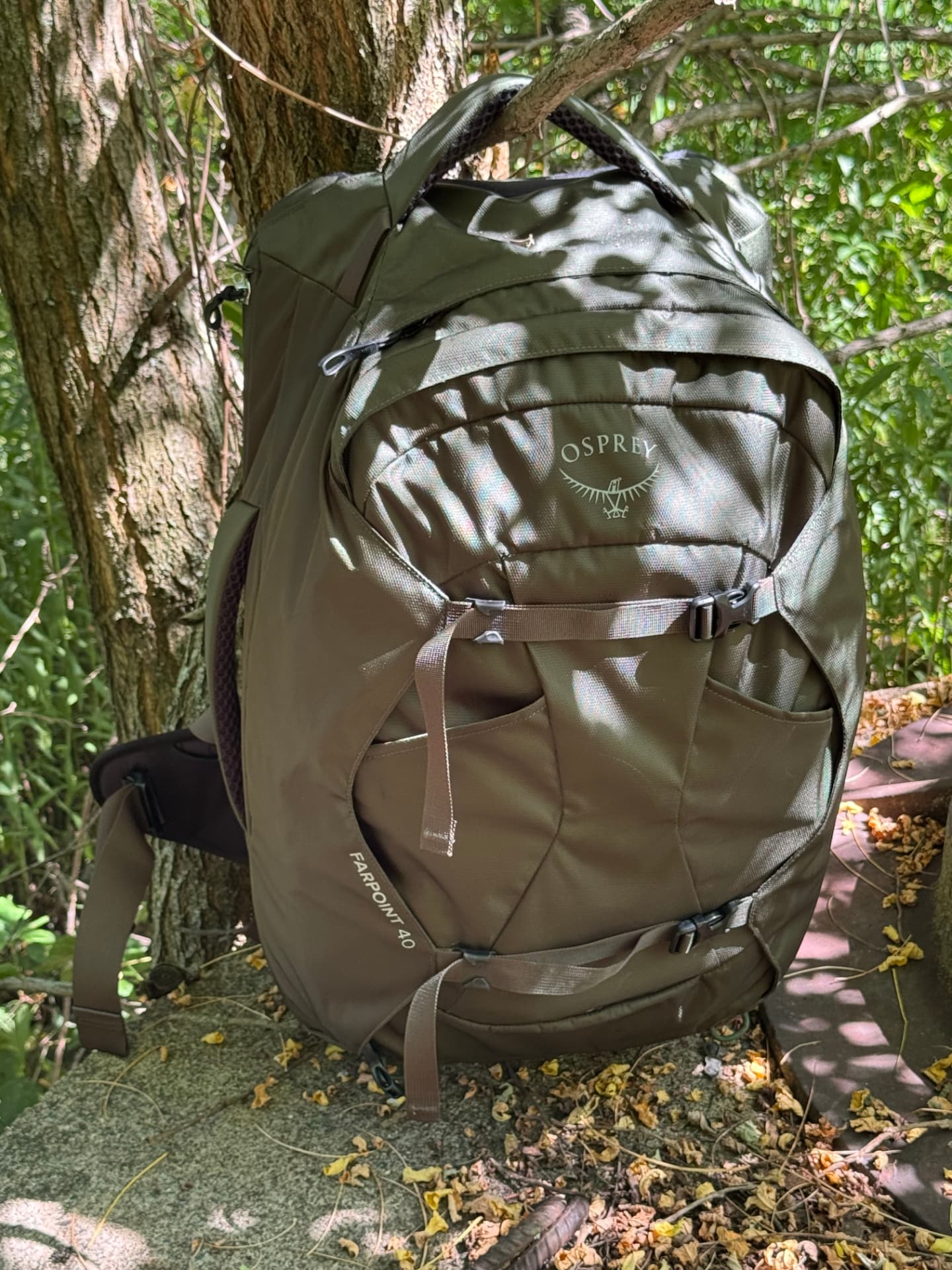
Rear straps for your waist readjust the weight to your hips making it easy to carry long distances
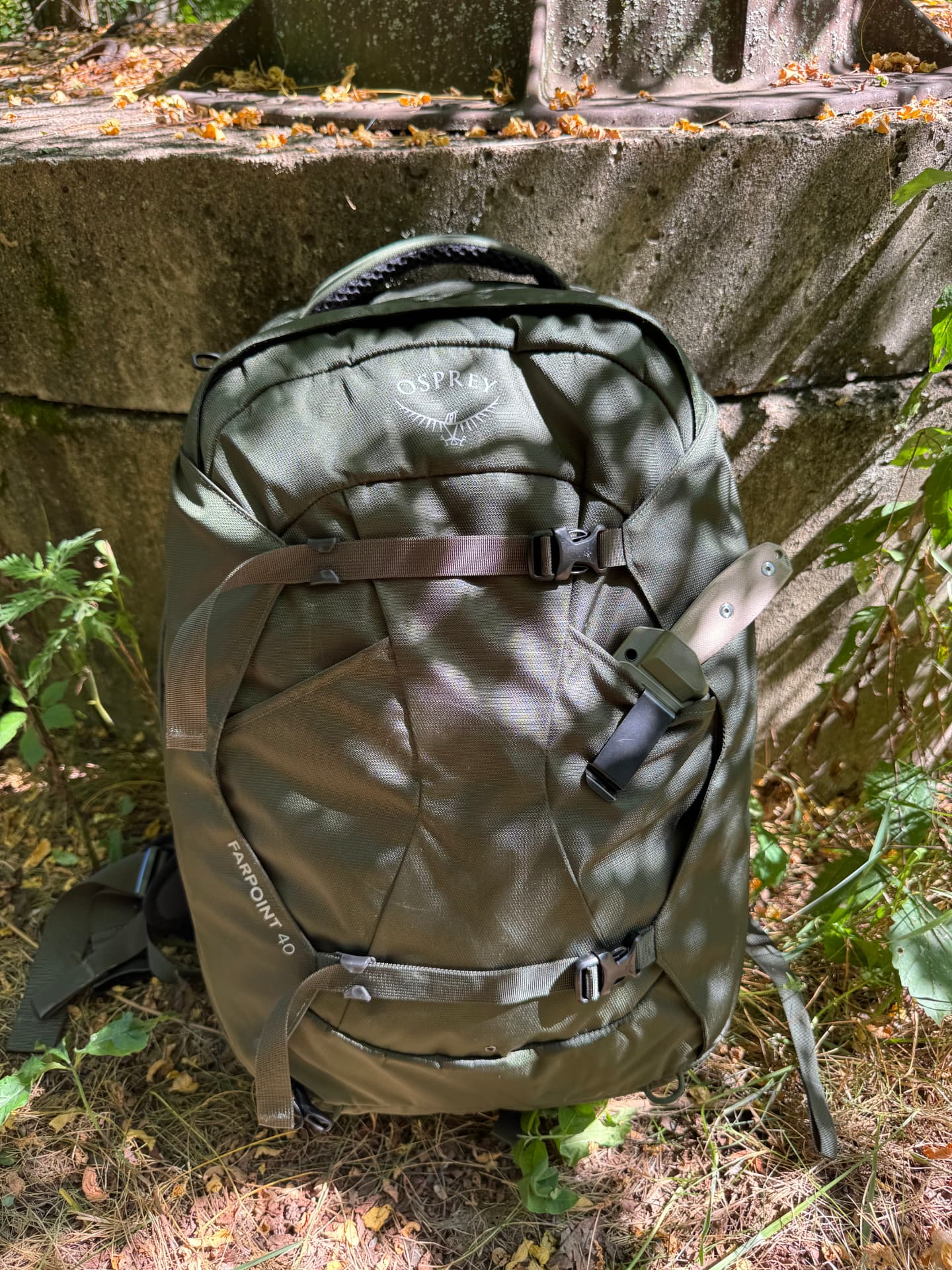
The deep exterior front pouch allows for easy access to anything from your EDC to water bottles
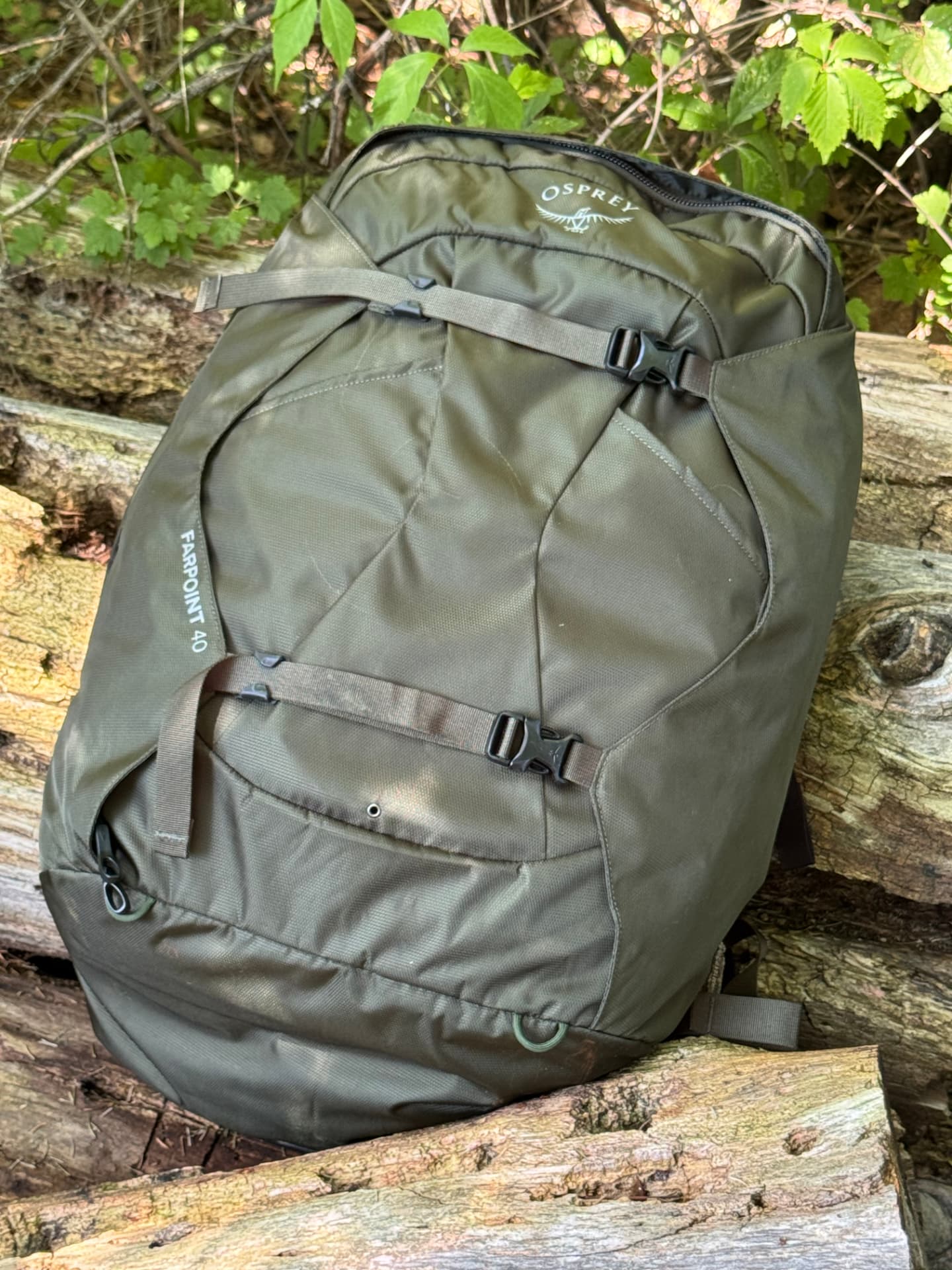
Farpoint 40 branding, dual compression straps, and upper zip pocket.
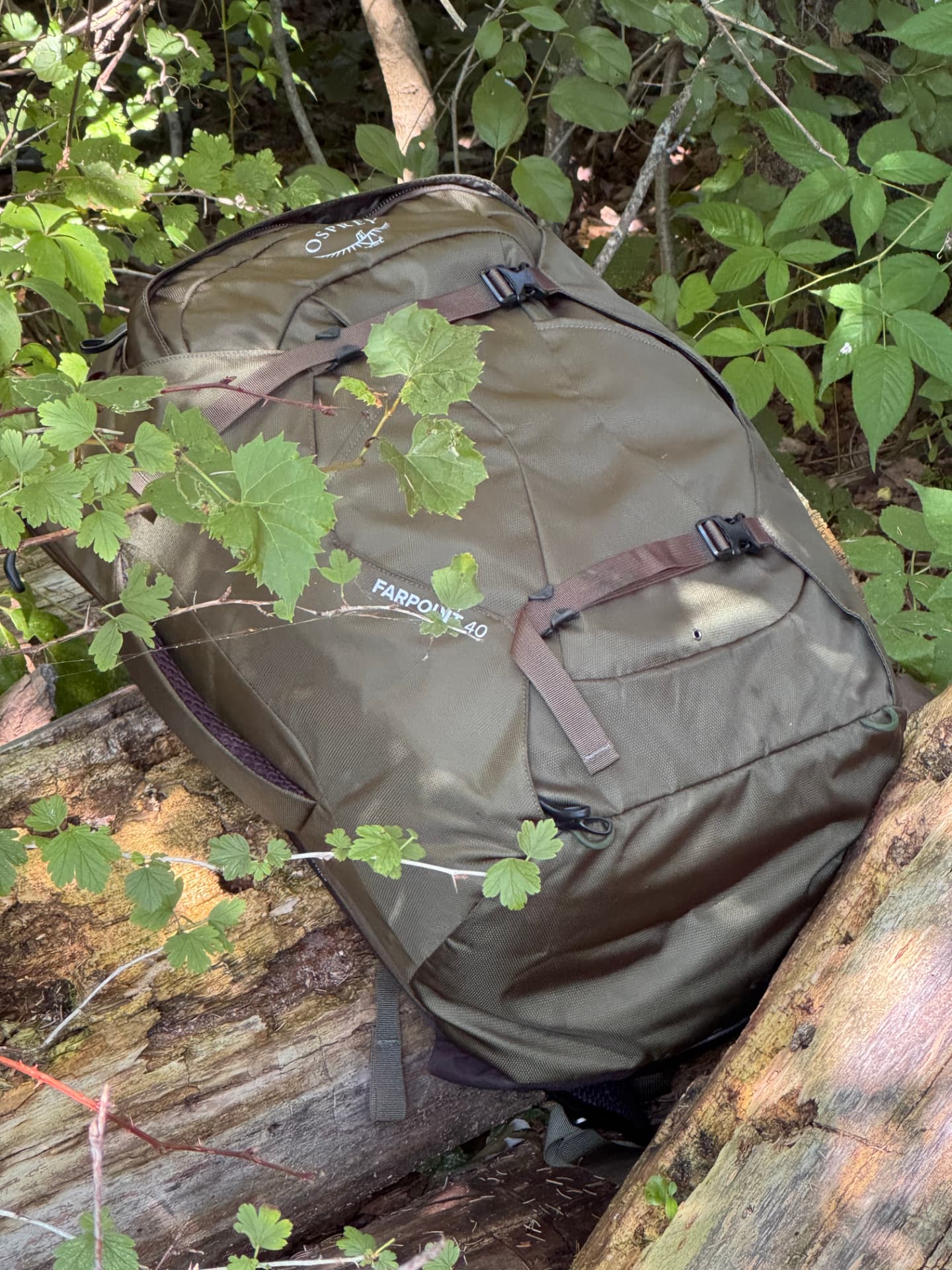
The side handle allows for carrying the backpack like luggage, an understated feature
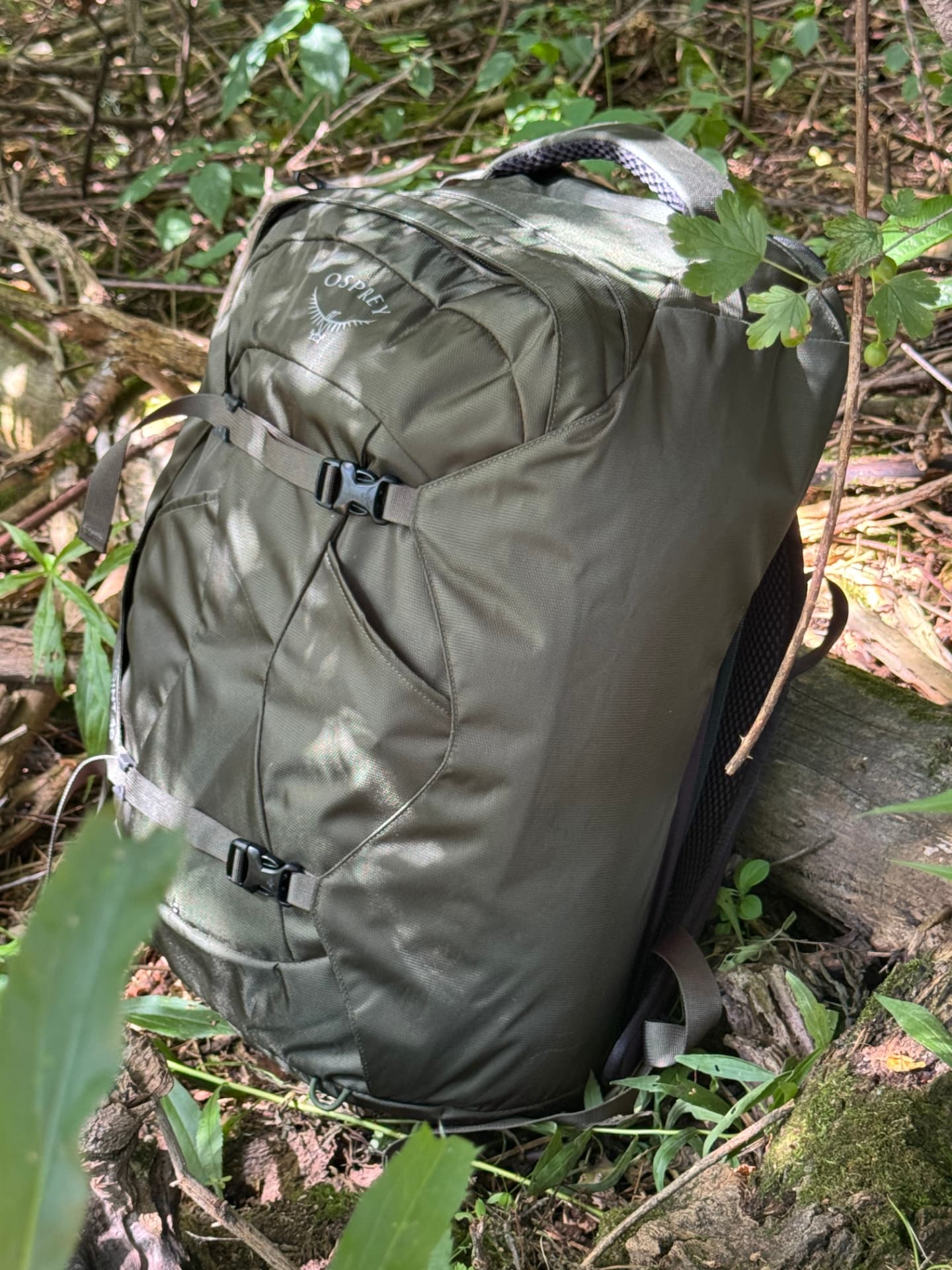
Depth and taper of the main compartment when packed out.
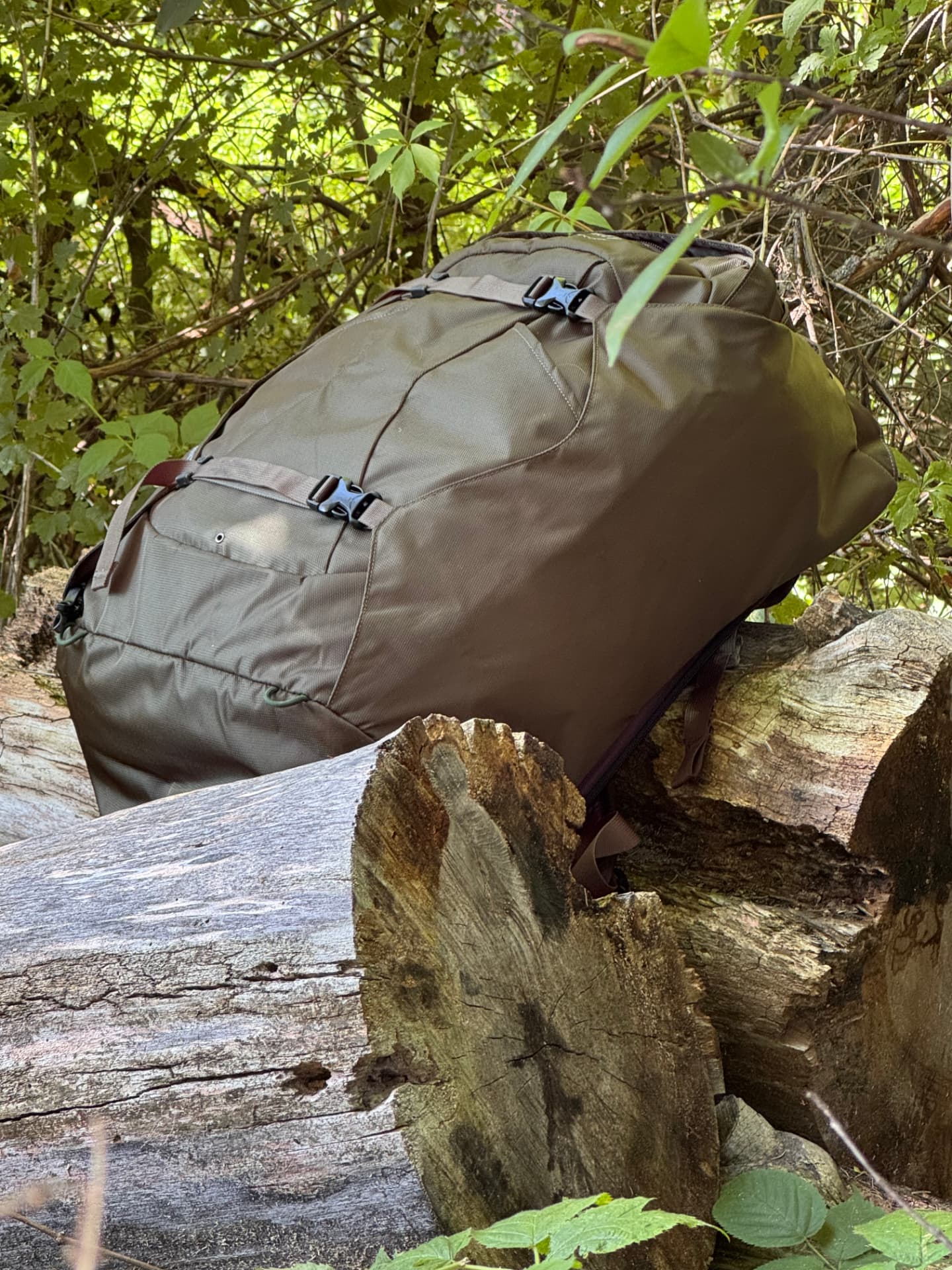
Straps drawn down to shrink the profile for tight carry.
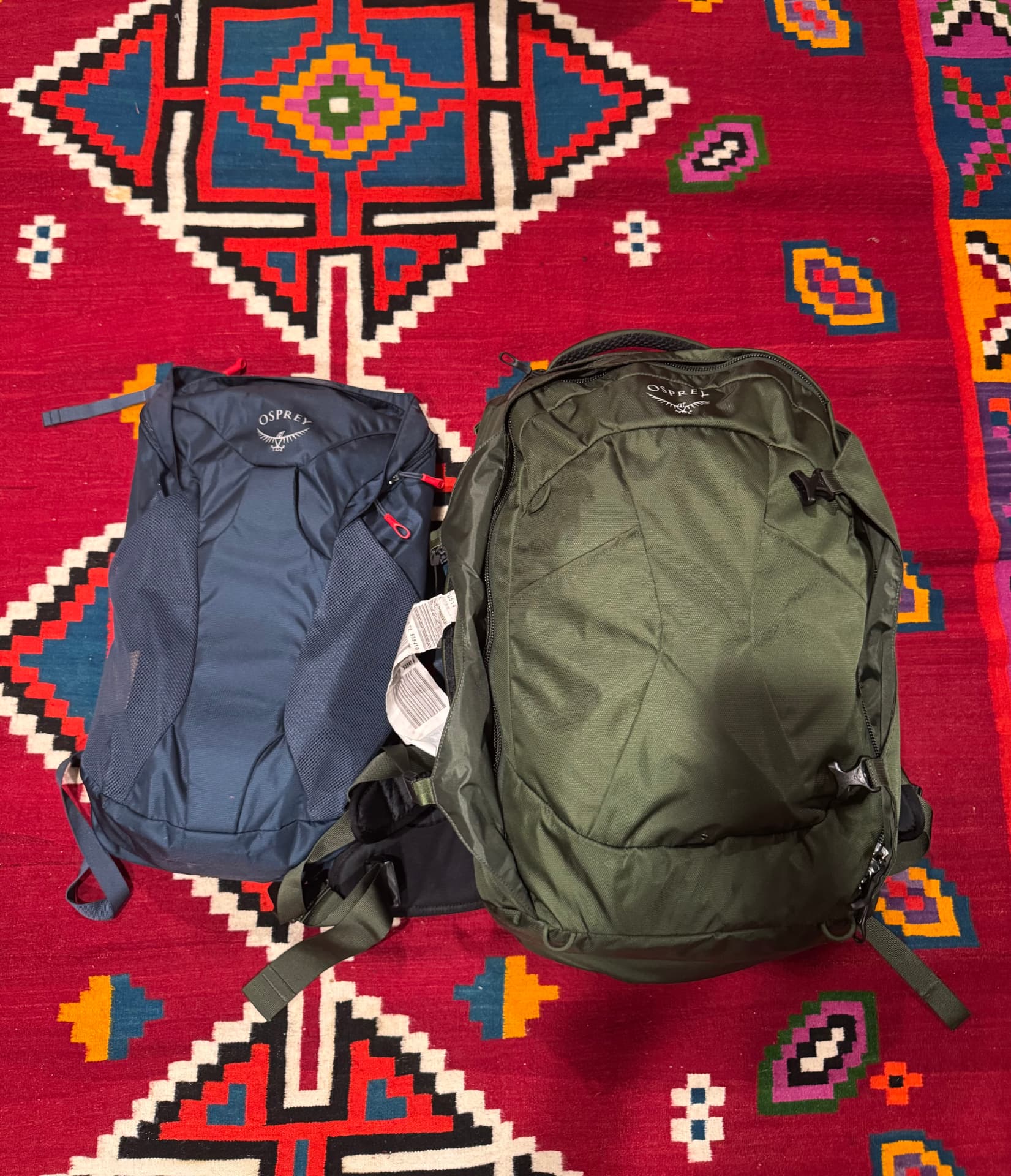
Side by side with the detachable 15-liter daypack.
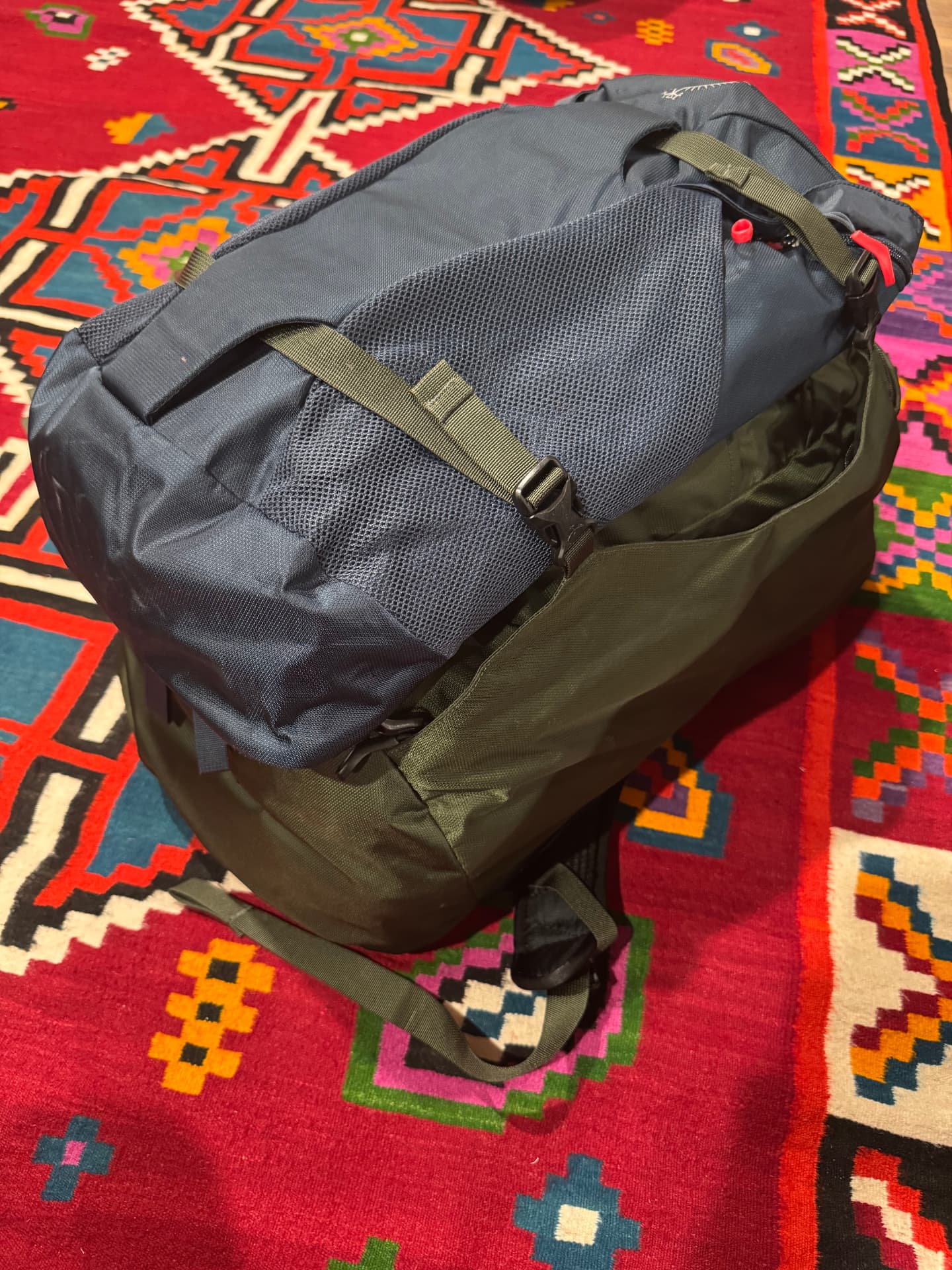
Top-down view of the daypack clipped over the main pack.
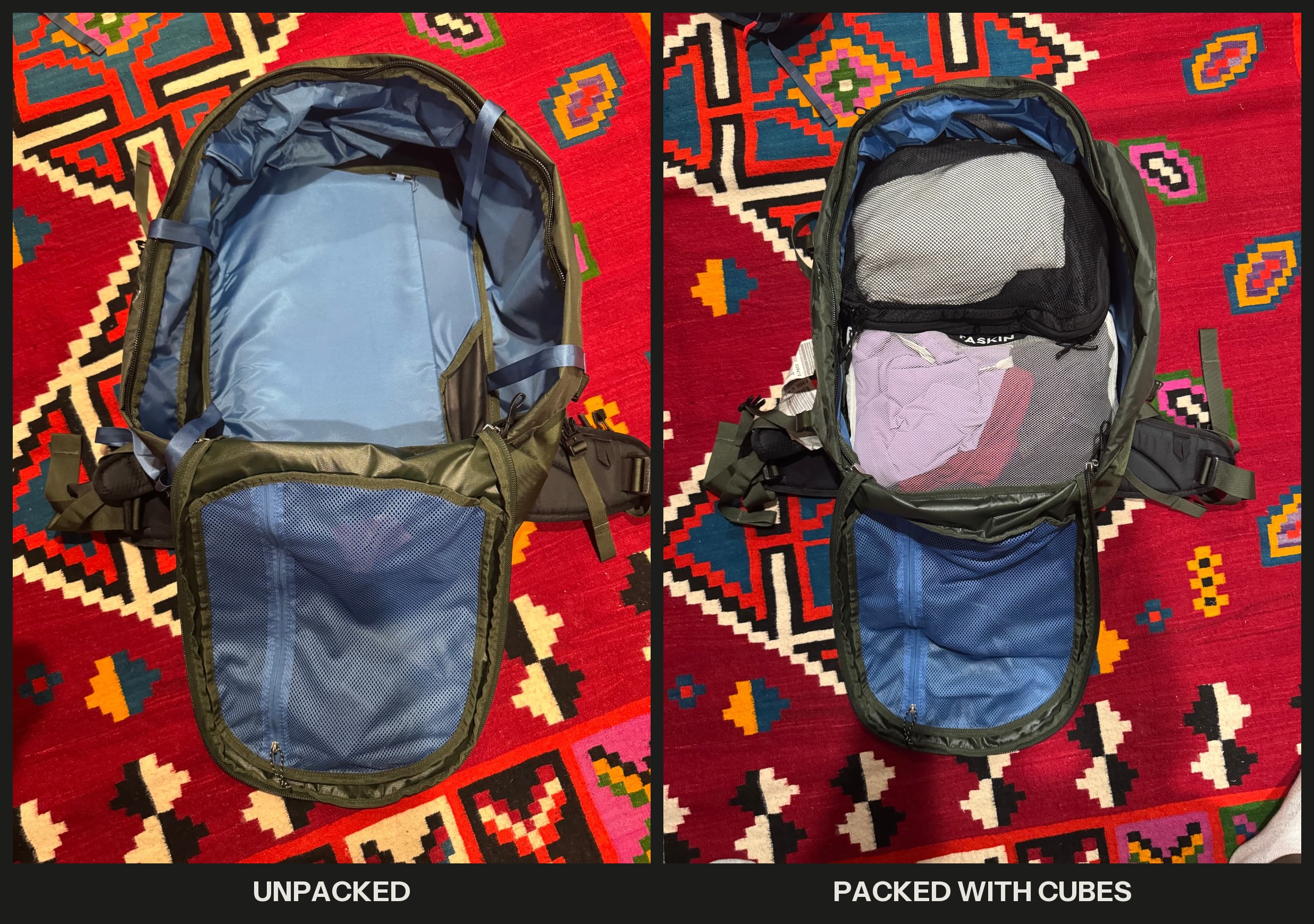
Side by side — the bare clamshell interior next to the same compartment loaded with packing cubes.
Why I Bought It
I wasn't looking for the biggest backpack.
I wasn't looking for the lightest one either.
I wanted one backpack that could handle international travel, camping, hotels, hostels, road trips, and everything in between.
Years later, I think that's exactly what I got.
Packing Capacity
Forty liters turns out to be the sweet spot.
Packing for a week is easy.
Packing for two weeks is absolutely possible, although it becomes a bit of a game of Tetris.
Packing cubes aren't optional in my opinion — they're essential.
The large open compartment is intentionally simple. Instead of dozens of pockets eating into usable space, Osprey gives you one large compartment that can be organized however you want.
Combined with the interior compression straps, it's surprising how much clothing and gear this backpack comfortably carries.
Those compression straps deserve special recognition. Once everything is cinched down, the pack somehow feels noticeably smaller without sacrificing capacity.
The Daypack
Pairing the Farpoint 40 with the matching Farpoint/Fairview Daypack transforms it into a complete travel system.
The detachable 15-liter daypack has comfortably carried:
- Two laptops
- Two laptop chargers
- Toiletries
- Electronics
- Daily essentials
During flights, the Farpoint rides overhead while the daypack fits beneath the seat in front of me.
Once I arrive, I simply unclip the daypack, leave the main backpack behind, and head out exploring.
The clip attachment system is simple, secure, and takes only seconds to use.
The daypack is also compatible with a hydration bladder, making it equally comfortable on hiking trails as it is walking through a city.
Buy the Farpoint DaypackCarry-On Performance
One of my favorite things about this backpack is that it flies exceptionally well.
I've packed it to the point where I questioned whether it would still fit.
It always has.
Occasionally I need to rotate it slightly to fit into the overhead compartment when it's completely full, but I've never regretted choosing the 40-liter version.
Durability
This backpack has seen fine desert sand, motorcycle vibration, dirt roads, campgrounds, airports, and years of travel.
The fabric still feels bombproof.
The zippers continue to glide smoothly.
The stitching has never given me a reason to question it.
Confidence is difficult to measure. This backpack inspires it.
Preparedness Perspective
Would I build a dedicated 72-hour bug-out bag around the Farpoint 40?
Absolutely.
Preparedness isn't always about buying specialized equipment. Sometimes it's about knowing exactly how the gear you already own performs.
The Farpoint 40 excels as an evacuation bag, vehicle go-bag, disaster travel bag, or extended displacement backpack.
If I needed to leave home because of a wildfire, hurricane, flood, or another emergency requiring several days away, I'd have complete confidence loading this backpack with clothing, documents, electronics, food, water, and medical supplies.
Its biggest strength isn't pretending to be a tactical backpack. It's being a travel backpack I've already trusted in demanding environments.
Could This Be My Bug-Out Bag?
Yes — with realistic expectations.
For evacuations, disaster travel, vehicle kits, or living out of one backpack for several days, absolutely.
For carrying extremely heavy loads deep into the backcountry, I'd choose a purpose-built backpacking pack instead.
Preparedness is about understanding the strengths and limitations of your equipment — not pretending one piece of gear does everything.
What I Love
- Outstanding build quality
- Extremely comfortable suspension
- Compression straps maximize capacity
- Excellent carry-on dimensions
- Rugged construction
- Detachable daypack (sold separately)
- Hydration-compatible daypack
- Side carry handle becomes surprisingly useful
Things to Know
- The Farpoint 40 intentionally sacrifices organization in favor of packing efficiency.
- The large open compartment makes packing cubes almost mandatory.
- If you already use packing cubes, you'll probably love the layout.
- If you rely on dozens of internal pockets, this backpack may take some adjustment.
Apocalypse Warehouse Scorecard
Durability
Comfort
Carry-On Performance
Preparedness Utility
Organization
Value
Living With It
Living with a backpack teaches you things specifications never can.
The side handle gets used constantly.
The compression straps create more usable room than seems possible.
The detachable daypack means I can leave the main backpack at camp, in a hotel, or inside a tent and head out with exactly what I need.
Preparedness has also taught me something else.
Familiarity matters.
In an emergency, I'd rather carry a backpack I've lived out of for weeks than a tactical backpack I've packed twice.
I know exactly where everything fits. I know how much weight it comfortably carries. I know how it behaves after long days of walking.
That confidence is difficult to buy.
Would I Buy It Again?
100%
I've trusted this backpack through deserts, forests, motorcycle trips, campsites, and countless flights.
It has never given me a reason to doubt it.
It's not trying to be a military rucksack.
It's not overloaded with unnecessary features.
It's simply a rugged, thoughtfully designed backpack that has repeatedly proven itself when life became less convenient.
And that's exactly why I trust it.
If mine disappeared tomorrow, I'd order another one before planning my next trip.