
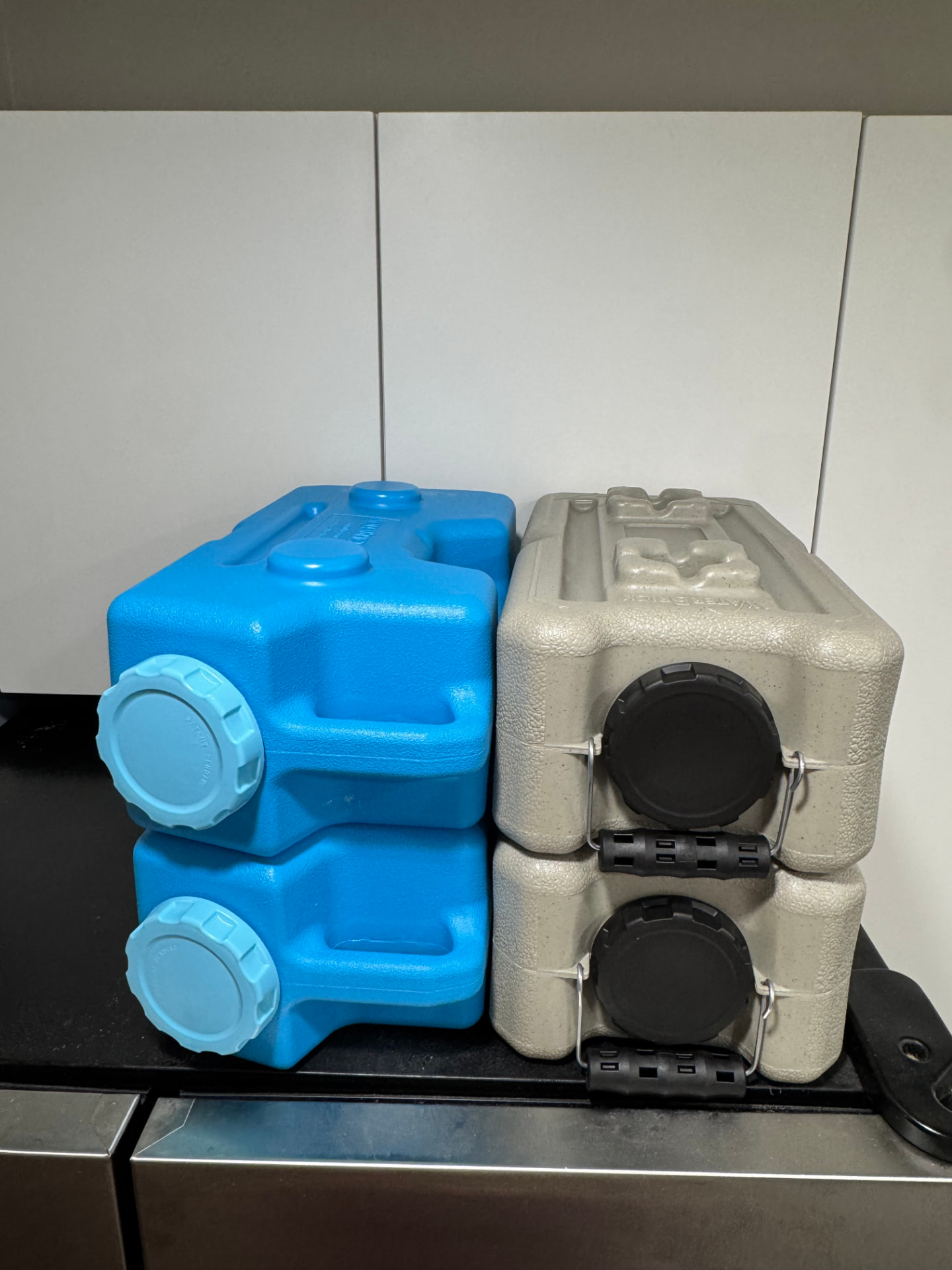
Today we're comparing Sagan Life's AquaBrick vs. the WaterBrick.
We put these two long-term water storage solutions head-to-head on portability, size, quality, ergonomics, storability and more.
Let's jump in.
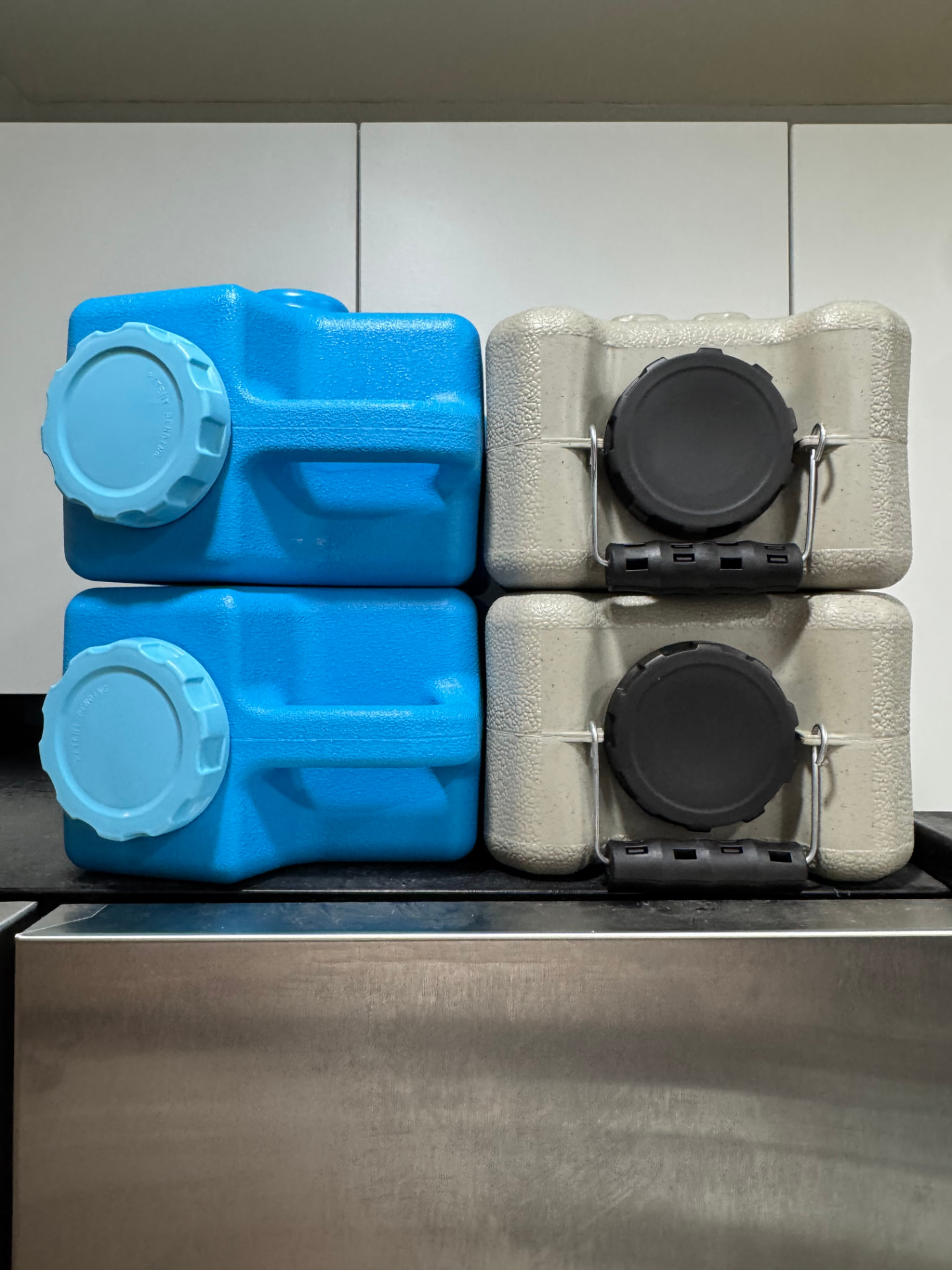
They're Ugly
No matter what option you choose, they're ugly.
There's no way you can have them visible on a shelf without someone eventually asking:
"What the hell is that?"
And honestly, it's a good question.
What is it?
You have a couple options for what you want these to be.
Do you want them to store water or food?
Do you want to store water for up to five years or just for a camping trip?
Do you want to store human food or have a supply of dog food on hand?
Each option is versatile in what you can do with them.
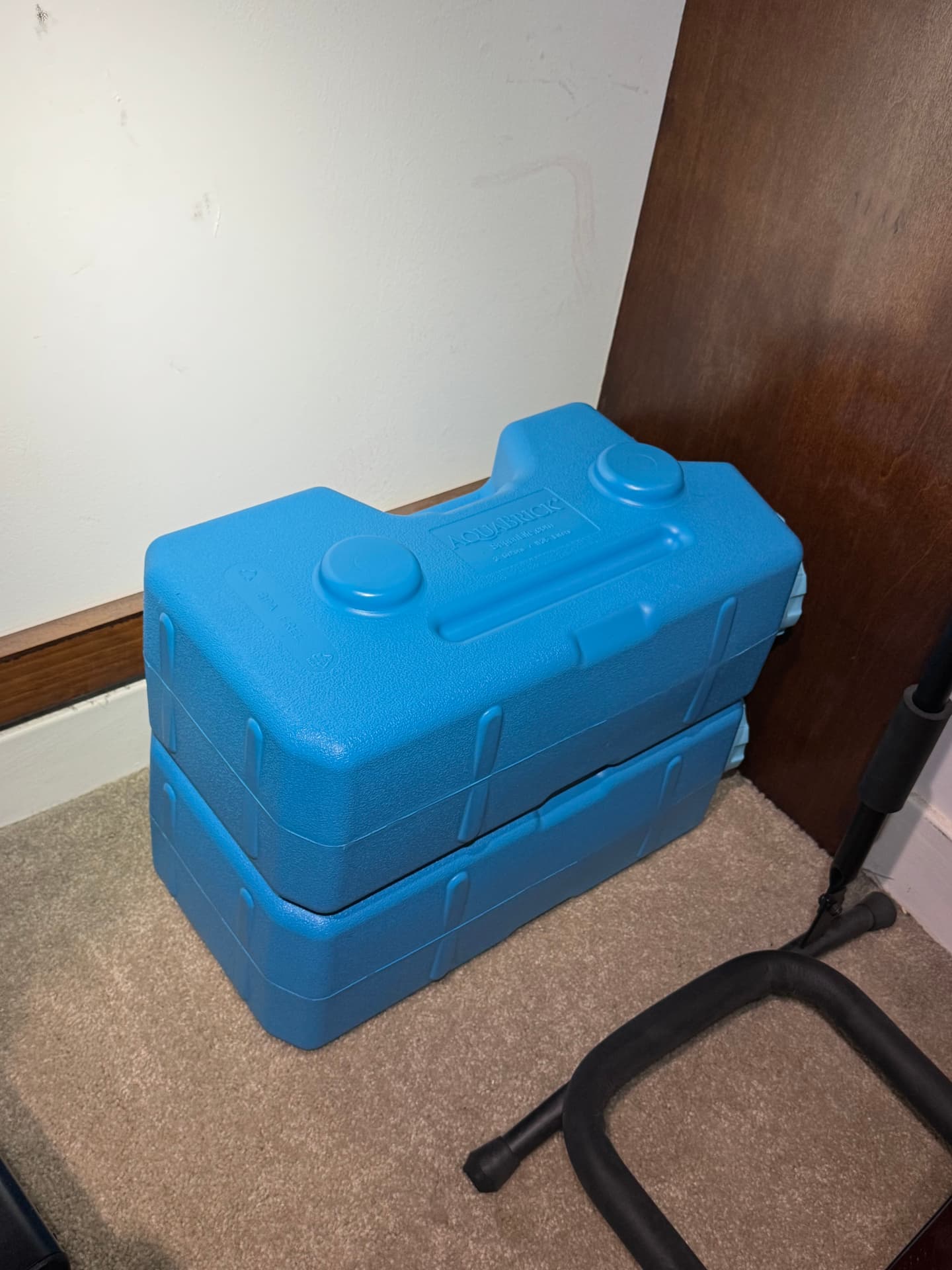
However, the bright blue brick on your shelf is an eyesore.
At least the WaterBrick has the option to come in a more muted earth-tone color.
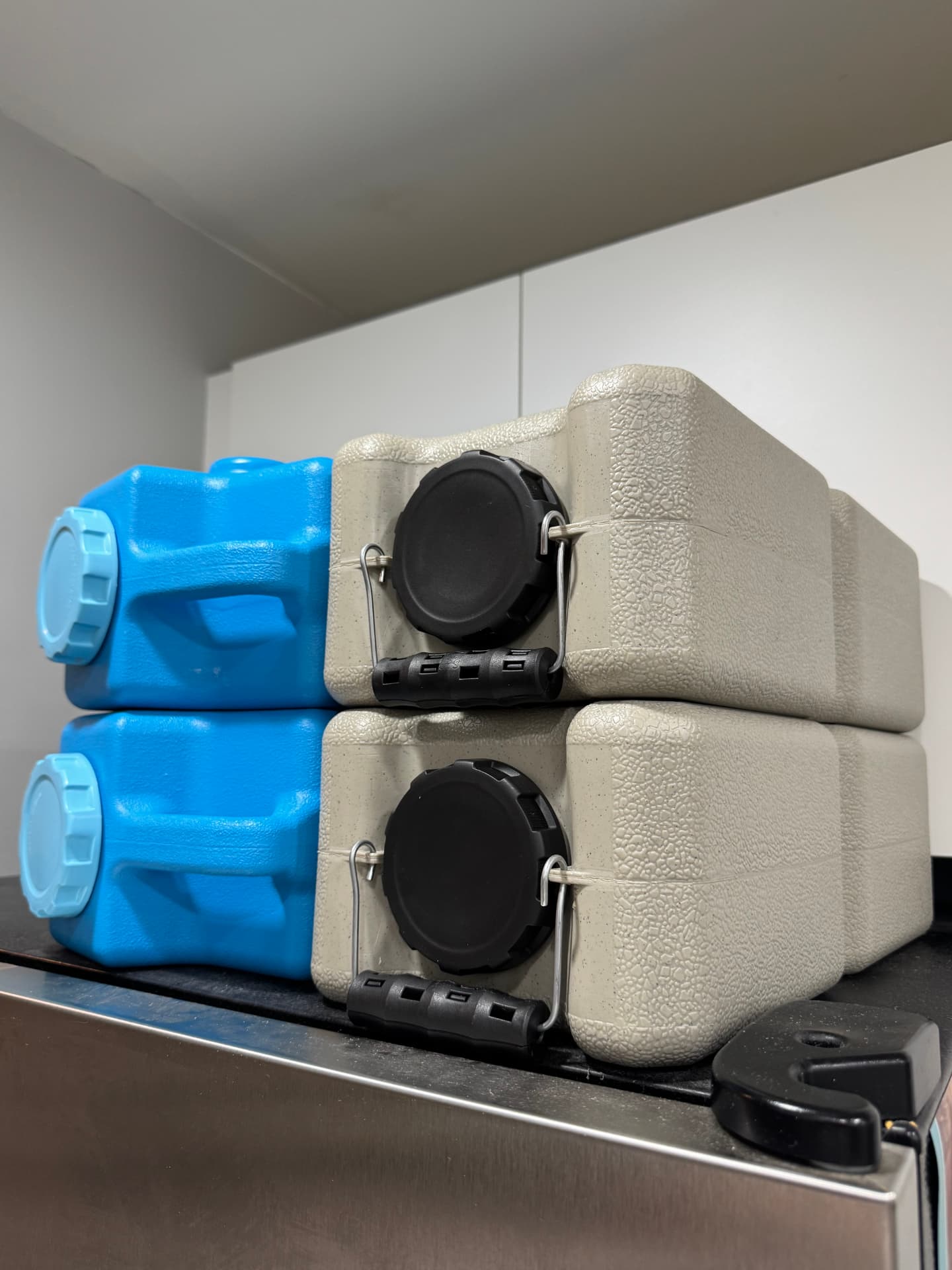
We chose the earth-tone WaterBrick for this review to easily tell it apart from the blue AquaBrick, which is the only standard color we used for the AquaBrick in this comparison.
As far as aesthetics:
But do looks really matter when you're storing water for a life-or-death scenario?
The answer is a rather obvious "no."
It's what's inside that counts.
The Half-Gallon That Adds Up
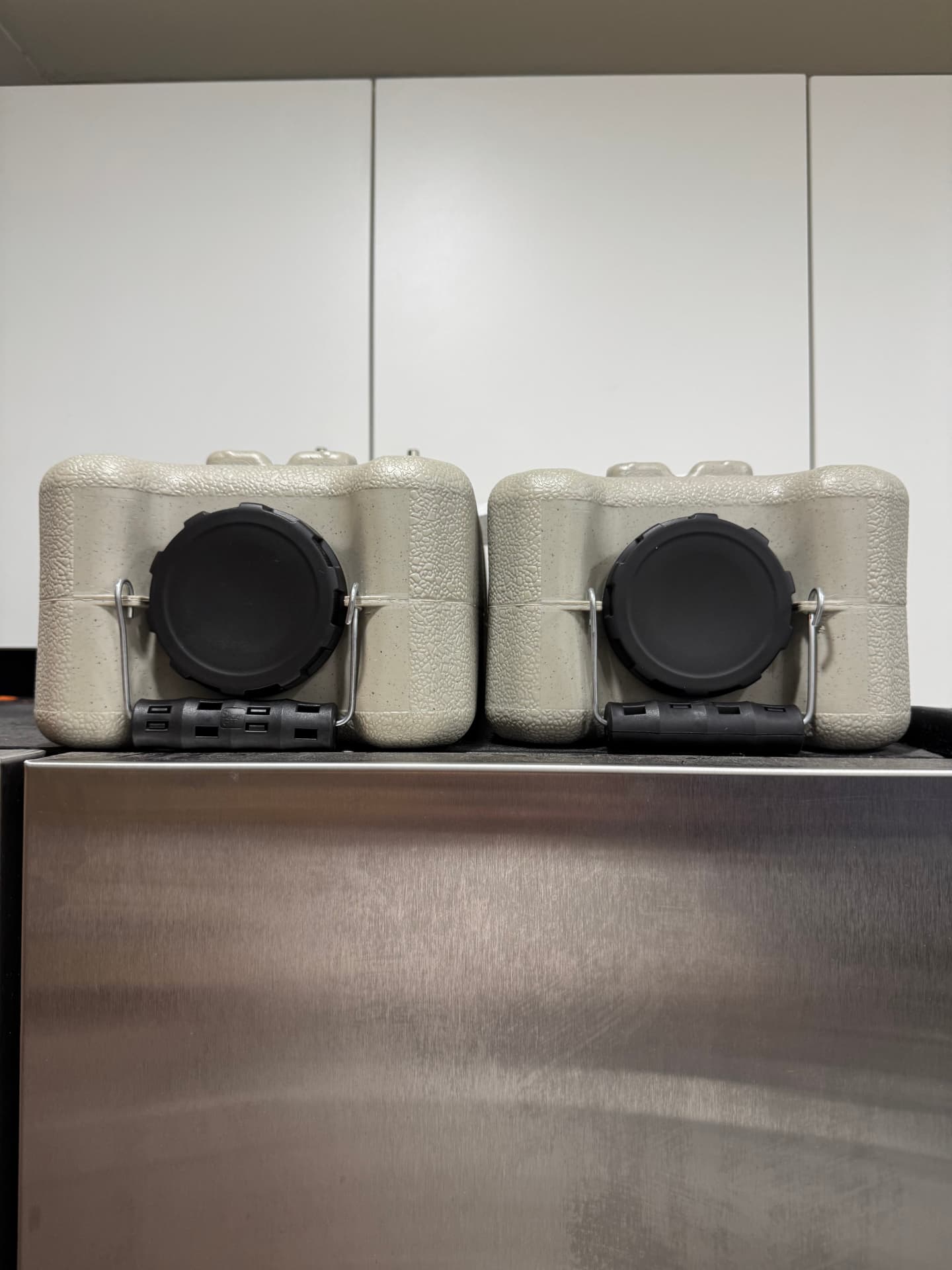
The WaterBrick is the larger of the two.
That half-gallon difference doesn't sound like much until you start multiplying the containers.
Four WaterBricks give you 14 gallons.
Four AquaBricks give you 12 gallons.
That's two additional gallons of stored water from the same number of containers.
For someone building a serious emergency water supply in a limited amount of space, that extra capacity matters.
The Support Column Problem
The WaterBrick is known for making it difficult to get every last drop of water out.
If you look inside, there's a support column through the middle that can divert water around the opening to the spout.
This forces the user into an almost comical dance to get the last remaining water out.
This also makes cleaning less fun.
When you're trying to make sure all your soap is out — and, even more importantly, all your bleach or sanitizing solution — water always seems to magically appear when you tilt the container at a different angle.
It can be frustrating.
Compared to that, the AquaBrick's much simpler interior is easier to empty and clean.
Clean It First
Before putting either container into service, clean and sanitize it.
Wash the inside with clean water and a small amount of dish soap, rinse thoroughly, then sanitize according to the container manufacturer's instructions and the directions for whatever sanitizing solution you're using.
Make sure the solution contacts the interior surfaces, then drain and rinse thoroughly before filling.
Do not assume a brand-new container is ready to fill and immediately put into long-term storage.
Clean it first.
The container itself does not magically make water good for five years.
If you want stored water to remain usable for up to five years, use an appropriate water preserver when filling the container and follow the preserver manufacturer's instructions.
The water preserver is an important part of a long-term storage setup.
Carrying Them to the Car
Now for the fun part.
The bugout.
What if you need to get out of town and carry your water stores to your car?
Don't worry.
We tried it for you.
This is where AquaBrick's lower capacity actually works in its favor.
The lesser weight makes it much easier to maneuver.
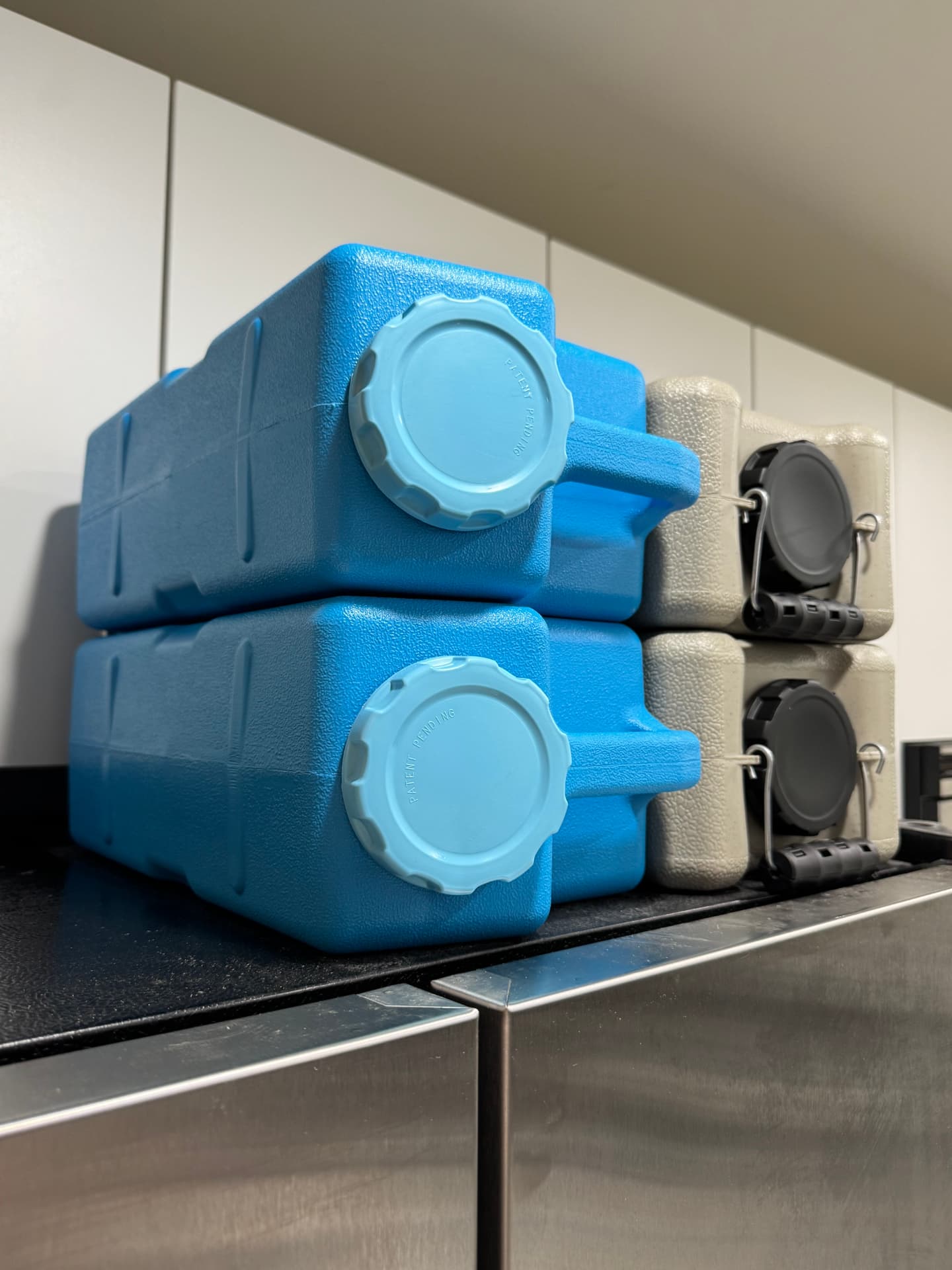
AquaBrick also has integrated top and side handles molded into the container, giving you a couple different angles to carry it.
The bigger, heavier WaterBrick uses a detachable handle that can move up or down.
It can be easy to pinch yourself, and the center of gravity while using the handle distributes the weight straight down rather than across the cube.
The result is a container that feels heavier and less comfortable to carry.
In a situation where I had to move multiple containers, I'd much rather deal with an AquaBrick.
Not Just Water
Water isn't the only thing these containers can hold.
Both can be used for food storage.
AquaBrick is rated for approximately 20 pounds of dry goods.
WaterBrick can hold up to approximately 27 pounds of dry food depending on the food being stored.
That makes either one useful beyond water storage.
You could dedicate some containers to water and others to dry food.
Out of the Box
Starting from the ordering process, Sagan Life's AquaBrick was sent with love.
The CEO sends you an email — albeit a generic automated email, but a nice touch nonetheless.
The cubes fit snugly in the box, and they include a catalog of other products.
WaterBrick, not so much.
It feels like they know they're the top dog in the space and care a bit less about presentation because they know they have a kickass product.
And they do.
But the box it was sent in was embarrassingly large for the bricks and didn't give the same customer-first feeling.
Again, it's what's inside that counts.
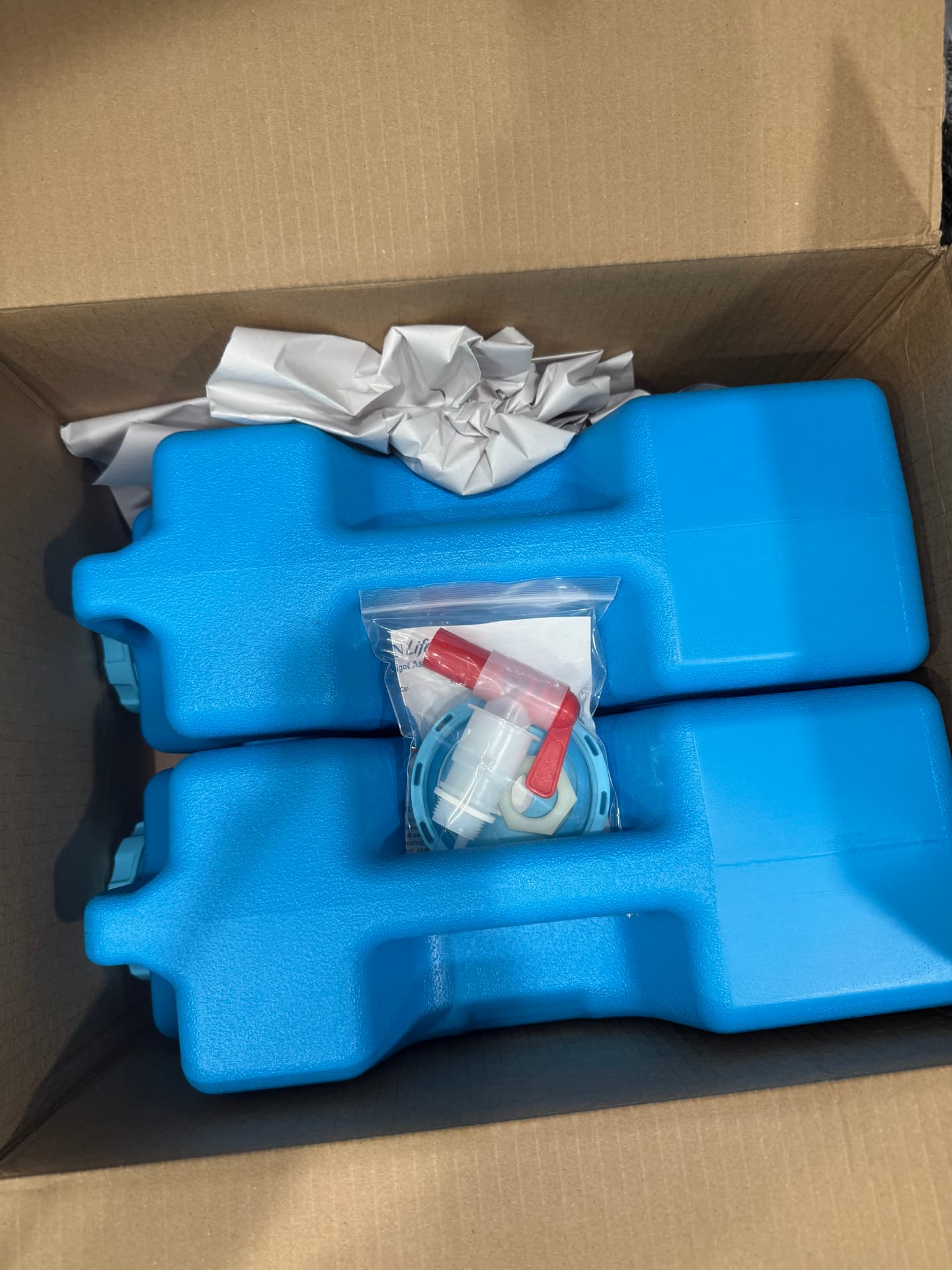
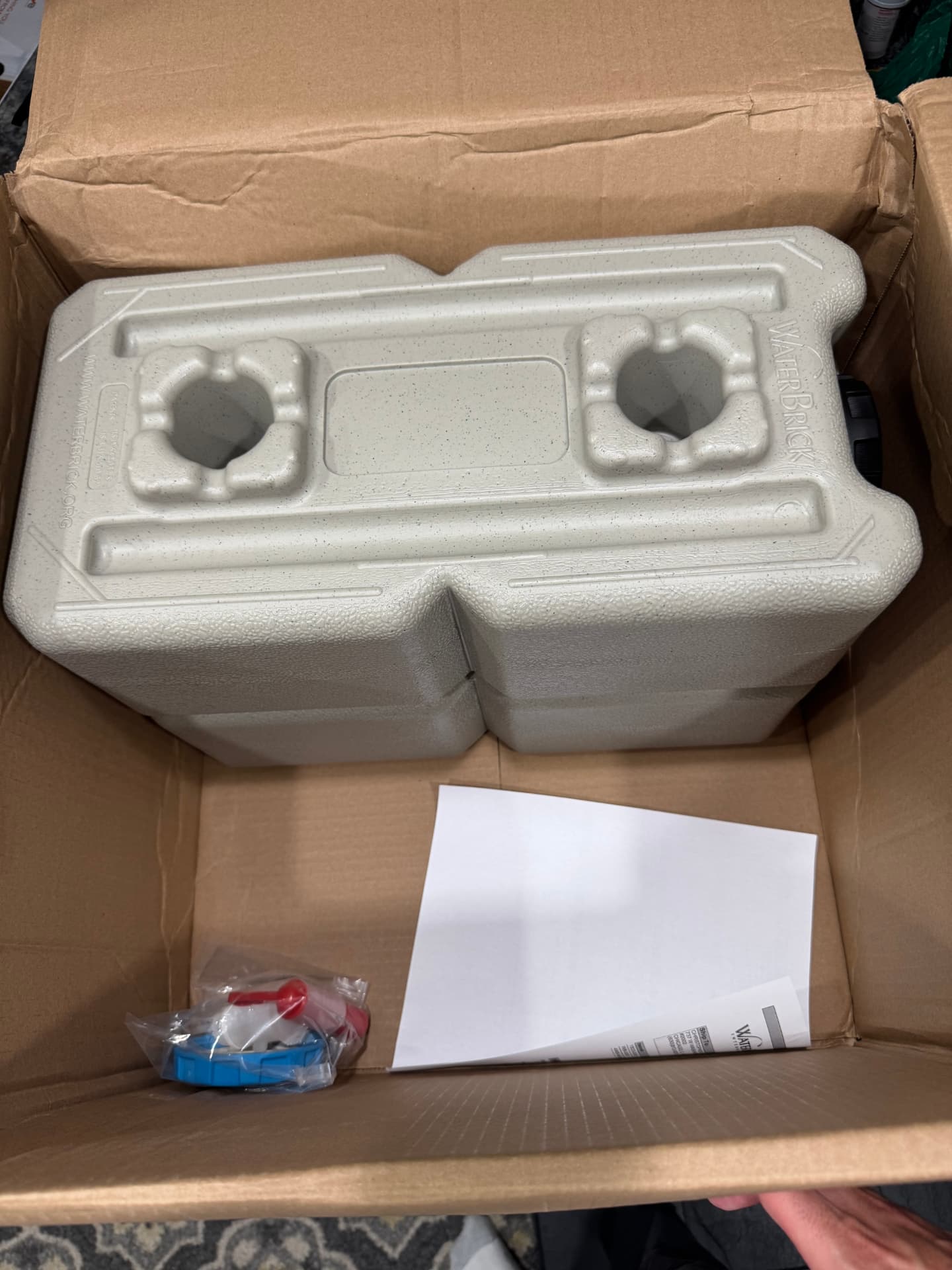
Let's look at what actually came in the boxes.
Both bricks came with spouts that looked nearly identical in color and function.
We wouldn't try to interchange them, as the two products use different seals.
Both bricks feel durable.
Would I want to drop either one down a flight of stairs filled to the brim?
No.
But I do think both could survive some pretty serious abuse.
Small Footprint, Real Volume
Both products are designed around the same basic idea:
Store a meaningful amount of water in a relatively small footprint.
They're stackable and designed to make efficient use of storage space.
That's a major advantage over large water barrels or tanks when you're working with limited space.
AquaBrick and WaterBrick can both be used in garages, basements, closets and other storage areas where maximizing usable space matters.
AquaBrick Filtration
This is where things get really interesting.
The AquaBrick can integrate with a dedicated water filtration system.
The filtration system is not simply included with every basic AquaBrick purchase. The $185 price is for the AquaBrick with the purifier system.
But that additional capability gives AquaBrick a major advantage.
You aren't limited to thinking of the container only as a vessel for water you've already stored.
With the appropriate filtration setup, the AquaBrick can also become part of a system for treating additional freshwater if your stored supply runs out.
That capability is the biggest reason AquaBrick ultimately gets the edge in this comparison.
The Comparison Table
- AquaBrick
- 3 gallons
- WaterBrick
- 3.5 gallons
- AquaBrick
- ~27 lb
- WaterBrick
- ~30 lb
- AquaBrick
- 9" × 18" × 6"
- WaterBrick
- 9" × 18" × 6"
- AquaBrick
- ~20 lb dry goods
- WaterBrick
- Up to ~27 lb dry food
- AquaBrick
- 2 integrated handles
- WaterBrick
- Detachable handle
- AquaBrick
- Yes
- WaterBrick
- More difficult to fully drain
- AquaBrick
- Yes
- WaterBrick
- More difficult
- AquaBrick
- Yes
- WaterBrick
- Yes
- AquaBrick
- Yes
- WaterBrick
- Yes
- AquaBrick
- Blue
- WaterBrick
- Blue / Earth Tone
- AquaBrick
- Yes — $185 with purifier system
- WaterBrick
- No integrated filtration option
- AquaBrick
- Yes — use water preserver for up to 5-year storage
- WaterBrick
- Yes — use water preserver for long-term storage
- AquaBrick
- Portability, handling, cleaning and filtration flexibility
- WaterBrick
- Maximum capacity and food-storage capacity
Portability, cleaning, filtration option
Capacity, food storage, build
Two tenths of a point apart. Both are legitimate choices.
FAQ
Drum Roll Please
So here we are.
All tied up.
It would be more than fair to end the review here.
You really cannot go wrong with either of these.
They're high-quality, useful products for long-term water storage in a small-space or mobile setting.
However, we came here to find a winner.
So here it is.
Drum roll please...
Why?
Its ability to integrate with a water filtration system.
The purifier system costs extra, but having that capability in your back pocket should you find yourself tapped dry and in need of more purified water is simply awesome.
AquaBrick wins.
Heads up: the two buttons below are Amazon affiliate links. If you buy through them, Apocalypse Warehouse earns a small commission at no extra cost to you. It did not change a single score, sentence, or conclusion in this review.