
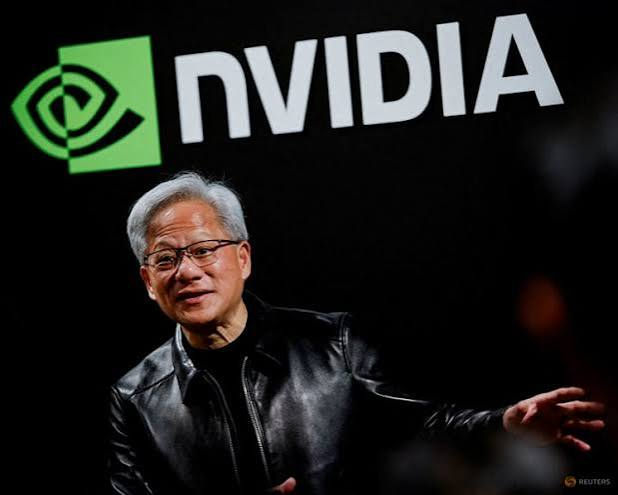
Current as of November 11, 2026. The intelligence allegations described here have not been publicly established, and Nvidia's investigation is ongoing.
There are a lot of ways to make headlines. Having one of the most powerful technology executives in the world caught up in an alleged Chinese espionage operation is certainly one of them.
Nvidia CEO Jensen Huang has spent the last several years becoming one of the most influential people in technology. His company makes the chips powering much of the modern AI boom. Governments want them. Tech companies need them. The United States considers access to advanced AI computing a matter of national and economic security.
And now Huang is at the center of a story involving an alleged foreign intelligence operation, an extramarital relationship, and questions about whether one of America's most strategically important companies was targeted by China.
It's an uncomfortable story. It's also a reminder that the AI race isn't just about who builds the better chatbot.
It's about national security, economic power, infrastructure, intelligence, and the future balance of power between the United States and China.
Let's get into it.
So, Did Jensen Huang Get Honeypotted?

First, a quick explanation.
A honeypot is an intelligence tactic in which someone uses a personal or romantic relationship to gain access to a target, collect sensitive information, influence decisions, or create leverage. It doesn't necessarily involve someone being blackmailed. Sometimes the goal is simply to build trust and get close enough to learn things that would otherwise be difficult to access.
It's an old tactic. The technology industry hasn't made it obsolete.
Recent reporting alleges that Jensen Huang had an intimate relationship with Alice Huang, a Chinese citizen and former executive at Megaspeed, a Singapore-based technology company involved in the AI computing industry. Alice Huang is not related to Jensen Huang.
U.S. intelligence officials reportedly believe Alice Huang was working with Chinese intelligence. Reporting has described concerns that she may have used her business relationships to collect information or facilitate access to Nvidia's technology and supply chain.
Megaspeed is particularly relevant because of its position in the AI computing industry. It has been associated with Nvidia hardware, and U.S. authorities have reportedly scrutinized concerns about advanced chips potentially reaching China through third-party channels.
Nvidia's board has now launched an independent investigation into whether Jensen Huang was targeted by a foreign intelligence effort. The company has hired outside legal counsel to assist with the investigation.
Huang has acknowledged being unfaithful to his wife and apologized to his family and colleagues. He has said he supports the investigation and will cooperate fully.
But let's be precise about what we know.
The intelligence allegations have not been independently established in public. China has denied them. Nvidia's board has said it has no reason to believe that company secrets or U.S. national security were compromised, although its investigation is examining available information.
And importantly, public reporting does not establish that the relationship was deliberately engineered as a honeypot from the beginning.
Additional reporting published November 10 alleged that Alice Huang and associates helped facilitate the movement of approximately $7.5 billion worth of Nvidia chips into Chinese companies. That figure comes from reporting by The Information, cited by Reuters. It is an allegation, not a confirmed finding of the Nvidia investigation or a proven conclusion about the destination and legality of every shipment.
So we shouldn't confuse an alleged intelligence operation with a proven successful compromise.
But even the possibility deserves serious attention.

Why Jensen Huang Matters So Much
If this were the CEO of a company making kitchen appliances, it would still be a fascinating intelligence story.
But Jensen Huang runs Nvidia.
Nvidia is not just another technology company. Its graphics processing units, networking hardware, and software ecosystem have become central to the development and deployment of artificial intelligence.
Think about what that means.
The companies building AI models need computing power. The companies operating data centers need computing power. Governments developing AI capabilities need computing power. The military applications of artificial intelligence need computing power.
Nvidia sits at the center of much of that ecosystem.
Its chips are used to train and run increasingly sophisticated AI models. Its software ecosystem has made its hardware especially valuable to developers. Its customers include some of the largest technology companies and cloud computing providers in the world.
Jensen Huang isn't simply running a successful semiconductor company. He is leading a company whose products influence how quickly the United States and its competitors can develop AI capabilities.
That makes access to Nvidia a strategic interest for foreign governments.
And it makes the people around its leadership valuable potential intelligence targets.
The concern isn't limited to someone stealing a secret product design. Information about customer relationships, future products, chip availability, supply chains, export restrictions, and business strategy could all be valuable.
Even information that seems relatively harmless in isolation can become useful when combined with other intelligence.
The AI Race Against China Is Not a Normal Business Competition
It's tempting to think of the AI race as a competition between technology companies.
OpenAI versus DeepSeek. Nvidia versus Huawei. Microsoft versus Alibaba.
But that misses the bigger picture.
The United States and China are competing over a technology that could influence economic productivity, military capabilities, intelligence gathering, cybersecurity, manufacturing, scientific research, and global influence.
AI isn't just another software product.
It has the potential to change how countries operate.
Consider some of the areas where this competition matters:
Military capabilities: AI can assist with intelligence analysis, logistics, autonomous systems, simulation, surveillance, and decision support.
Cybersecurity: AI can help defenders identify vulnerabilities and respond to attacks. It can also help attackers automate reconnaissance, generate malicious code, and scale social engineering.
Manufacturing: AI can improve industrial automation, logistics, quality control, and research and development.
Economic productivity: Countries that successfully integrate AI into their economies may gain substantial advantages in productivity and innovation.
Scientific development: AI systems can accelerate research in fields ranging from materials science to medicine and engineering.
The country that develops the strongest AI ecosystem won't necessarily win every category. But falling behind in foundational capabilities could have serious consequences.
And this is where the Nvidia story becomes particularly important.
The Chip Problem: You Can't Win the AI Race Without Computing Power
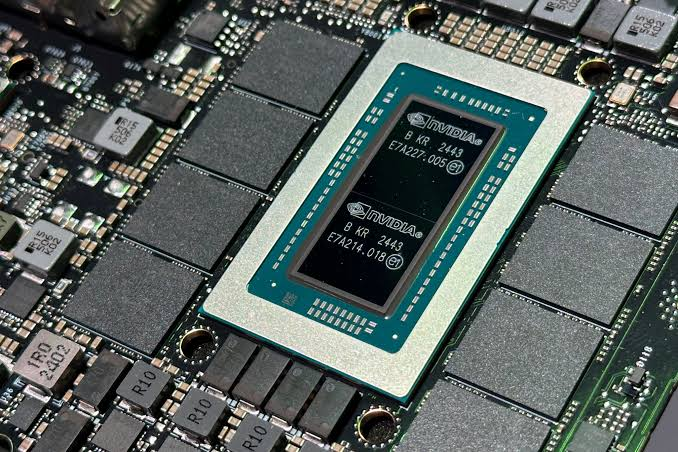
AI requires enormous amounts of computing power.
That computing power depends on more than just designing a good chip.
It requires advanced semiconductor manufacturing, specialized equipment, packaging, memory, networking, electricity, cooling, data centers, and complex global supply chains.
The United States has significant advantages in AI chip design and the broader technology ecosystem. But it also depends on a highly interconnected global semiconductor industry.
Some of the world's most advanced semiconductor manufacturing capacity is concentrated in Taiwan.
That creates an obvious strategic vulnerability.
A major disruption to semiconductor production or shipping could have consequences well beyond the technology industry. It could affect cloud services, consumer electronics, communications, manufacturing, and defense supply chains.
This is one reason export controls have become such a major part of U.S. policy toward China.
Washington has attempted to restrict China's access to certain advanced AI chips and semiconductor manufacturing technologies. The idea is to limit the computing capabilities available to China's most advanced AI developers and military organizations.
But export restrictions are difficult to enforce in a global market.
Chips can be sold to companies outside China. Data centers can be located in other countries. Computing capacity can be accessed remotely. Complex supply chains create opportunities for diversion and evasion.
The Megaspeed allegations highlight precisely why tracking hardware, customers, ownership, and end users matters.
A chip doesn't stop being strategically important just because it crosses an international border.
What This Means for America's Security
The Jensen Huang story should make us think beyond the individual.
Foreign intelligence agencies don't need to steal a missile system or break into a military installation to collect information that matters.
They can target business executives, engineers, researchers, investors, contractors, and people who have access to strategically important companies.
They can exploit personal relationships, financial incentives, professional ambitions, ideological sympathies, or simple human mistakes.
The technology industry has become a major national security target because the technology industry now produces capabilities that governments consider strategically important.
This creates a problem for corporate America.
Companies are accustomed to thinking about cybersecurity, intellectual property, and financial risk. But counterintelligence requires a different mindset.
It means understanding who has access to sensitive information, who is attempting to build relationships with employees, where business partners are located, and whether seemingly ordinary commercial arrangements create security risks.
It also means that executives need to understand that their personal decisions can have consequences far beyond their private lives.
A CEO's personal vulnerability can become a company's vulnerability.
And a company's vulnerability can become a national security concern.
How Should We Prepare?
This is where the conversation becomes relevant to Apocalypse Warehouse.
We're not going to pretend that an individual household can meaningfully influence the outcome of the U.S.-China AI competition.
But we can prepare for the consequences of a more competitive, technologically dependent, and potentially unstable world.
Preparedness isn't just about food storage, water filters, generators, and emergency communications.
It's also about understanding the systems we depend on and identifying what happens when those systems fail.
Here are five areas worth paying attention to.
1. Take Digital Security Seriously
Your digital life is an enormous collection of personal information.
Financial records, passwords, personal photographs, work documents, travel plans, contacts, and communications can all be valuable to someone attempting to compromise you.
Start with the basics:
- Use a password manager and unique passwords.
- Enable multifactor authentication, preferably with a passkey or hardware security key where supported.
- Keep your operating systems, phones, and applications updated.
- Be suspicious of unsolicited business opportunities and unexpected requests for sensitive information.
- Avoid oversharing personal information publicly.
- Maintain offline backups of important documents and files.
The same principles apply whether you're a corporate executive, a small business owner, or someone who simply wants to protect their family.
You don't need to be a billionaire to be a target.
2. Reduce Your Dependence on a Single Technology Provider
We have become incredibly dependent on a small number of technology companies.
Our communications, banking, cloud storage, work, entertainment, and even basic household functions increasingly depend on internet-connected services.
Think about what happens if an important service experiences a prolonged outage, a cyberattack, or a regional disruption.
Keep offline copies of critical documents. Maintain alternative ways to communicate. Know how to access important information without relying entirely on one cloud account.
For businesses, this means understanding how to operate if a critical software provider becomes unavailable.
For households, it means not assuming that everything will always be accessible through a phone.
3. Prepare for Infrastructure Disruptions
AI requires enormous amounts of electricity and increasingly sophisticated data center infrastructure.
That means the AI economy is also an energy and infrastructure story.
Electricity, cooling, networking, and physical facilities are all essential to the systems powering this technology.
A major infrastructure disruption doesn't need to be caused by an AI-related conflict to affect the AI economy. Severe weather, equipment failures, cyber incidents, and supply-chain disruptions can all have consequences.
For your household, the fundamentals still matter:
- Have a realistic blackout plan.
- Maintain backup lighting and charging options.
- Keep essential communications equipment available.
- Store water and food appropriate for your household.
- Understand how long you can operate without normal utilities.
- Have a plan for extended outages, not just a few hours without electricity.
The more technologically dependent society becomes, the more important it is to understand what happens when the technology stops working.
4. Understand the Supply Chains Behind Your Equipment
The products we depend on don't appear out of nowhere.
Batteries, electronics, solar equipment, communications devices, medical supplies, and replacement parts all rely on global manufacturing and shipping networks.
A geopolitical crisis involving China or Taiwan could disrupt supply chains in ways that affect ordinary consumers.
You don't need to panic-buy electronics or stockpile every component you can find.
Instead, pay attention to the equipment you rely on and identify the items that would be difficult to replace.
For critical equipment, consider keeping reasonable spare parts, replacement batteries, cables, and backup devices.
Buy equipment from manufacturers with established support and a track record of reliability.
And when something is essential, avoid depending on a single point of failure.
5. Learn to Recognize Information Operations
The next major conflict may not begin with a missile launch.
It could begin with a cyberattack, a leaked document, manipulated video, a fabricated news story, or a coordinated campaign designed to create confusion.
AI makes it easier to generate convincing text, images, audio, and video at scale.
That creates an environment where misinformation can spread faster and become more difficult to identify.
A few habits can make a difference:
- Verify major claims through multiple credible sources.
- Be skeptical of sensational videos and screenshots without original context.
- Look for primary documents when available.
- Don't share breaking stories simply because they confirm what you already believe.
- Understand that a convincing image or voice recording is not necessarily authentic.
Information is part of preparedness. Knowing what is actually happening matters when making decisions.
The Bigger Picture: AI Is Becoming Critical Infrastructure
The most important takeaway from this story isn't whether Jensen Huang was successfully manipulated.
We don't know that.
It's that the company at the center of the AI revolution is important enough to attract serious foreign intelligence attention.
And that's not going to change.
AI is likely to become increasingly integrated into manufacturing, transportation, finance, healthcare, communications, research, and national defense.
The United States and China understand what's at stake. Both are investing heavily in the technology, infrastructure, and talent needed to develop it.
This competition will influence the economy, the job market, national security, and the technology available to ordinary people.
It will also create new vulnerabilities.
We should expect more attempts to steal intellectual property, compromise companies, manipulate decision-makers, disrupt supply chains, and influence public opinion.
The Jensen Huang allegations are a reminder that the people and companies driving technological progress are also potential targets.
And if there's one lesson worth taking away, it's this:
The future of preparedness isn't just about surviving without modern technology. It's about understanding how dependent we've become on it, recognizing where the vulnerabilities are, and making sure we're not completely helpless when something goes wrong.
Prepare for Tuesday. Ready for Doomsday.