Billionaires Aren't Preparing for the End of the World. They're Preparing for the End of the System.
Zuckerberg. Bezos. Thiel. Altman. What are the world's wealthiest people actually preparing for — and what can the rest of us learn from them?
If you had $200 billion, what would you buy to prepare for the end of the world? A bunker? An island? A second country?
It is a fun question, and it is the wrong one. The interesting question is not whether the world's wealthiest people expect an apocalypse. It is what their behavior reveals about how people with effectively unlimited resources think about risk — and which risks they consider worth spending real money to hedge.
Look at what actually gets bought and a pattern emerges that has very little to do with mushroom clouds. Remote land with its own water. Independent power. Food production. A second passport. An aircraft. A perimeter. These are not the purchases of people expecting the end of humanity. They are the purchases of people who have quietly concluded that the systems they depend on — grids, supply chains, currencies, courts, governments — are less reliable than their balance sheets.
What if they aren't preparing for the end of the world — but for the end of the system that made their wealth possible?
That distinction matters, because it changes what the rest of us should take from it. If billionaires were prophets of doom, the lesson would be despair. If they are risk managers buying redundancy, the lesson is something you can copy on a normal budget.
How we label claims
Well documented by reliable sources, public records, or direct statements.
Reported by credible publications, but not independently established.
Our interpretation of why someone might be preparing. Never presented as fact.
01
The Billionaire Prepper Index
Seven cases, each labeled by evidentiary strength. Where a person has publicly disputed a characterization, we say so. Where the motive is our reading rather than their statement, we call it speculation.
Mark Zuckerberg
Meta
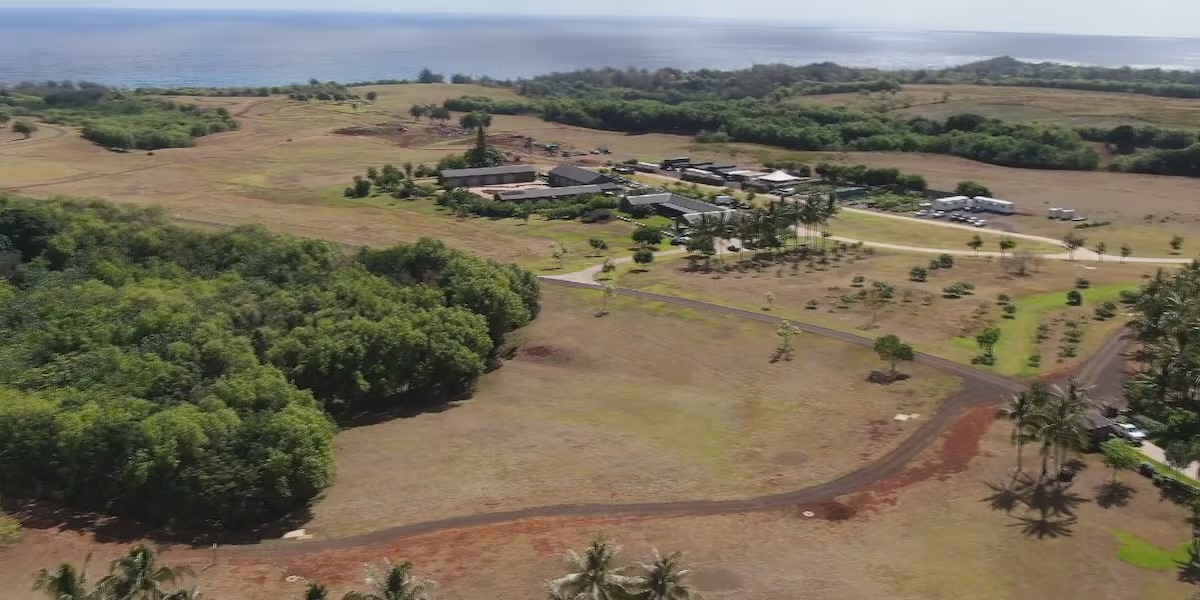
Koolau Ranch, a roughly 1,400-acre compound on Kauai's north shore, including a large underground structure with its own power and food storage described in permit filings and reporting.
Why it's labeled this way
Property, scale and the underground structure are documented in permits and on-the-ground reporting. Zuckerberg publicly disputes the "doomsday bunker" framing, calling it "just like a little shelter… like a basement."
Self-sufficiency at a single, extremely remote location: independent power, water and food, far from any grid he does not control.
Peter Thiel
PayPal / Palantir / Founders Fund
New Zealand citizenship granted in 2011 without meeting standard residency requirements; a large lakefront estate near Wanaka. His proposed luxury lodge was refused consent by the local council in 2022 and again by the Environment Court in 2024.
Why it's labeled this way
Citizenship, land purchase and the consent refusals are matters of public record and court rulings.
Jurisdictional optionality — a second legal home in a stable, food-exporting, geographically isolated country.
Jeff Bezos
Amazon / Blue Origin
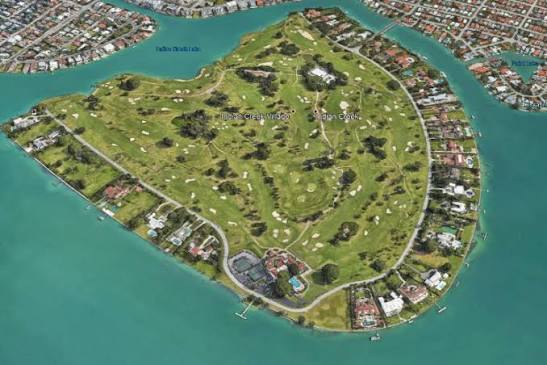
Roughly $234 million spent on three properties on Indian Creek Island, a private, gated, police-patrolled island in Biscayne Bay that the press nicknamed the "Billionaire Bunker."
Why it's labeled this way
The purchases are confirmed by county records and Bloomberg reporting. Important correction: "Billionaire Bunker" is the island's long-standing nickname for its security and exclusivity. We found no credible reporting that Bezos has built a shelter or made survivalist statements.
Controlled access and private security as a lifestyle baseline — a perimeter, not a shelter.
Sam Altman
OpenAI / Y Combinator
Told The New Yorker in 2016 he keeps "guns, gold, potassium iodide, antibiotics, batteries, water, gas masks from the Israeli Defense Force, and a big patch of land in Big Sur I can fly to."
Why it's labeled this way
This is an on-record, named quote in Tad Friend's 2016 profile. Later coverage resurfaced it; in 2023 he joked publicly that bunkers "won't really help" in an AI scenario. We found no formal retraction — treat any claim of a walk-back as unverified.
A supplies-and-mobility posture rather than a fortress: enough on hand to leave, plus somewhere to go.
Reid Hoffman
LinkedIn / Greylock
Told The New Yorker in 2017 that more than half of Silicon Valley billionaires have some form of "apocalypse insurance" — frequently a property in New Zealand.
Why it's labeled this way
The quote itself is on record. The "50%+" figure is Hoffman's own impression, not survey data, and no outlet has corroborated it with hard numbers.
That the behavior is a peer norm inside a small circle — insurance language, not prophecy language.
Palmer Luckey
Oculus / Anduril
Reported to own a decommissioned Atlas-F missile base in Kansas, alongside a Black Hawk helicopter and other military vehicles.
Why it's labeled this way
Business Insider's on-site reporting describes the silo as part of a personal collection. Framing it as prepping is our interpretation, not his stated purpose — Luckey has not publicly described a survival motive.
Hardened infrastructure as a hobby that happens to be hardened infrastructure.
Martín Varsavsky
Jazztel / Fon / Prelude Fertility
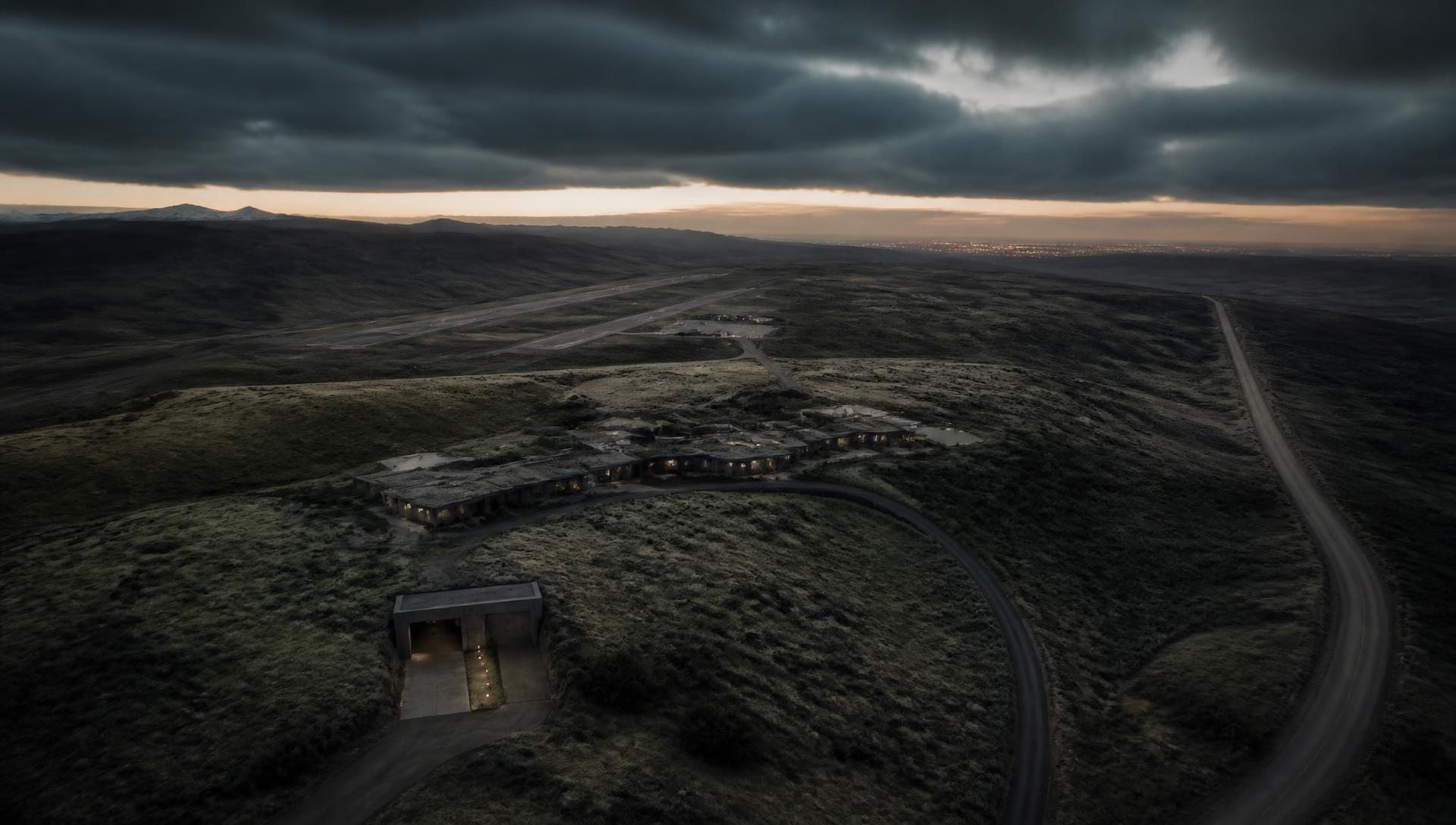
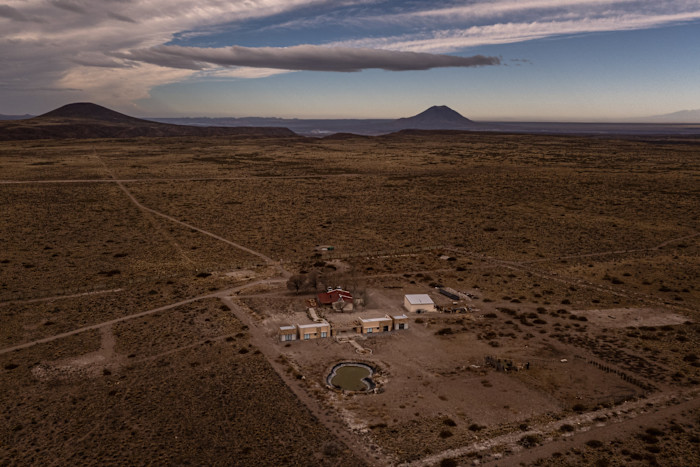
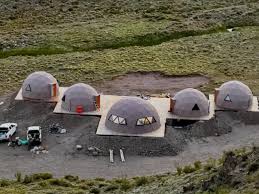
"Wamani," a reported ~32,000-hectare estate in the Valle de Uco, Mendoza, Argentina — modular housing, geodesic domes and solar power, described as a refuge for technology executives. He is quoted saying "we're already in World War Three" and that "it makes sense to have a refuge."
Why it's labeled this way
Reported by the Financial Times and carried by credible Argentine and Irish outlets in August 2026. We were not able to verify primary land or permit records ourselves.
A shared refuge in the southern hemisphere — one of the few explicitly stated nuclear-risk rationales in this list.
02
What Are They Actually Afraid Of?
Six candidate motives. For each, the strongest version of the argument — and the strongest version of the counterargument. None of these are confessions. All of them are interpretations.
Nuclear and geopolitical conflict
The argument
This is the one motive some of them say out loud. Varsavsky's quoted rationale for Wamani is explicitly conflict-driven, and Altman's 2016 list — potassium iodide, gas masks — is a fallout list, not a hurricane list. Southern-hemisphere land, remote islands and deep concrete are exactly what you buy if you are pricing a low-probability, high-consequence exchange.
The counterargument
Nuclear risk is the oldest and most legible catastrophe there is, which makes it the easiest one to shop for. A shelter is also a hedge that works against many things at once. Buying fallout-rated hardware does not prove someone expects fallout; it proves they wanted the most durable version of shelter available.
AI-driven disruption
The argument
The people building the most powerful AI systems have also been among the loudest about the risk. Altman signed on to the statement calling extinction risk from AI a global priority — while being on record, years earlier, with a personal survival kit and land he can fly to. Even short of catastrophe, rapid labor displacement is a plausible source of instability.
The counterargument
Altman himself has publicly joked that a bunker "won't really help" in an AI scenario, and he is right: no amount of concrete protects you from an economic or informational disruption. If AI risk were the real driver, you would expect governance and compute investments, not real estate. The timeline also fails — most of this land was bought before the current AI wave.
Civil unrest and class conflict
The argument
This is the interpretation that dominates online, and there is one honest data point behind it: Douglas Rushkoff's widely reported account of being asked by wealthy attendees how to keep security teams loyal after a collapse. Extreme inequality has historically produced instability, and the people at the top of it are not unaware.
The counterargument
SPECULATION, and the weakest-supported motive in this piece. No one on our list has said they are preparing for class conflict. Gated islands and private security are also simply what wealth has always purchased, in calm decades as much as turbulent ones. Attributing revolutionary fear to a specific person because they bought a fence is not analysis — it is projection.
Political instability
The argument
Second citizenships and foreign residencies are the tell. Thiel's New Zealand citizenship is the canonical case, and the pattern was pronounced enough that New Zealand's 2018 foreign-buyer legislation was passed against the backdrop of exactly this wave of purchases.
The counterargument
Second passports are ordinary tax, travel and business infrastructure for globally mobile wealth. Plenty of people hold them for reasons that have nothing to do with fearing their own country. It is a hedge against friction as much as against collapse.
Economic and systemic disruption
The argument
This is the thesis of this article. Nearly every asset on the list — land, private power, food production, foreign residency, hard assets — is a hedge against the failure of systems rather than the failure of civilization. Currencies, supply chains, courts, grids and governments are all things their fortunes depend on and none of them control.
The counterargument
Diversification is what wealth managers advise everyone with enough capital to diversify. A ranch is an uncorrelated asset before it is a refuge. Interpreting a portfolio decision as a prophecy risks reading intent into ordinary risk management.
Natural disasters
The argument
The least exciting explanation and possibly the most accurate one. Zuckerberg's own description — a shelter, like a basement — is consistent with what any Kauai property owner would want in a hurricane zone with a history of grid failures. Independent power and stored food are standard for remote island living, not evidence of anything.
The counterargument
Scale still matters. Storm shelters do not typically run to thousands of square feet with independent food and energy systems, and "it's just a basement" does less explanatory work at that size. The honest read is that the mundane explanation covers most of it, but not obviously all of it.
03
The Billionaire's Real Advantage Isn't the Bunker
Concrete is the least interesting thing money buys. A shelter is a single point of failure with better marketing: it only helps if you are already inside it, if the threat is one it was designed for, and if the world outside eventually becomes livable again. That is a narrow set of conditions.
What extreme wealth actually buys is optionality — the ability to keep choosing after most people have run out of choices. Not one plan executed perfectly, but eight overlapping ones, any of which is survivable.
Multiple residences
Somewhere else is always already prepared
Private transportation
Departure does not depend on airlines or roads
Private security
Response time measured in seconds
Independent power
Solar, storage and generation on site
Food production
Ranches and farms, not just pantries
Alternative communications
Satellite links that outlive the local network
Financial diversification
Multiple currencies, jurisdictions, hard assets
Second citizenship
Legal right to be somewhere else
A billionaire doesn't necessarily ask, “What happens if everything goes wrong?” They can ask, “Which country do I want to be in when it does?”
Read the index again with that lens and the entries stop looking like doomsday preparation. Thiel's citizenship is an option on a jurisdiction. Bezos's island is an option on privacy and controlled access. Zuckerberg's ranch is an option on self-sufficiency. Altman's Big Sur land plus an aircraft is an option on leaving. None of them require a prediction to be worth owning.
04
What Does This Mean for Everyone Else?
Here is the part that gets lost in the outrage cycle: optionality is not a luxury good. It scales down. The billionaire version costs nine figures; the household version costs a few hundred dollars and a weekend, and it protects against the disruptions you are statistically far more likely to experience — a five-day outage, a boil-water notice, an evacuation order, a job loss, a storm.
You don't need a $100 million compound to buy optionality.
Water
One gallon per person per day, two weeks stored. The cheapest resilience you will ever buy.
Food
Two weeks of shelf-stable food you actually eat, rotated. Enough to skip the grocery store entirely.
Backup power
A charged power station or battery bank keeps phones, lights and medical devices running.
Communications
A NOAA weather radio, a charged power bank, and a plan for when cell service is gone.
Medical supplies
A real trauma kit, 30 days of prescriptions, and the training to use both.
Mobility and fuel
Half a tank is the new empty. Keep the car above it and know two ways out.
Financial resilience
Small bills at home and a cash buffer. Card networks fail when the power does.
Evacuation planning
One destination, two routes, and a printed copy that does not need a signal.
Practical skills
Shut off your gas and water. Start a generator. Stop a bleed. Practice once a year.
Community
The highest-return prep there is. Neighbors arrive before any agency does.
Notice what is not on that list: fear. Nothing here requires believing that society is ending. Every item on it is useful in an ordinary bad week, which is the only kind of bad week most of us will ever actually get. That is the point. Preparedness done well is boring, cheap, and quietly reassuring — closer to insurance than to ideology.
05
What We Can Actually Observe
Maybe billionaires know something we don't. Maybe they don't. We can't know what any individual billionaire fears, and anyone who tells you otherwise is selling something.
What we can observe is what they're buying: redundancy, mobility, privacy, security and independence.
You don't need a $100 million compound.
- Enough water to get through a disruption.
- Enough food to skip the grocery store.
- A backup way to communicate.
- A little cash.
- A charged battery.
- A full tank.
- A first-aid kit.
- And a plan.
Preparedness isn't predicting the apocalypse. It's making sure one bad week doesn't become a catastrophe.
06
Sources
- Wired — Inside Mark Zuckerberg's Top-Secret Hawaii Compound (2024)
- Fortune — Zuckerberg addresses the "doomsday bunker" reports (Dec 2024)
- The Guardian — Peter Thiel refused consent for New Zealand lodge (2022)
- RNZ — Thiel abandons Lake Wanaka lodge build (2024)
- Bloomberg — Bezos buys on Indian Creek Island (2023)
- AP News — Bezos's Miami purchases
- The New Yorker — Sam Altman's Manifest Destiny (2016)
- The New Yorker — Doomsday Prep for the Super-Rich (2017)
- Business Insider — Palmer Luckey's missile base and collection (2024)
- The Irish Times — Tech titans prepare an Argentinian ranch (2026)
- Bloomberg — The Super Rich of Silicon Valley Have a Doomsday Escape Plan (2018)
- TechCrunch — New Zealand's foreign buyer ban (2018)
Where reporting and a subject's own account conflict, we present both. Motive analysis in this piece is our interpretation and is labeled as speculation throughout.
Where you actually stand
You don't need a billion-dollar bunker.
Find out where you're actually vulnerable. Nine categories, about four minutes, and a ranked list of what to fix first.
Take the Preparedness Assessment