
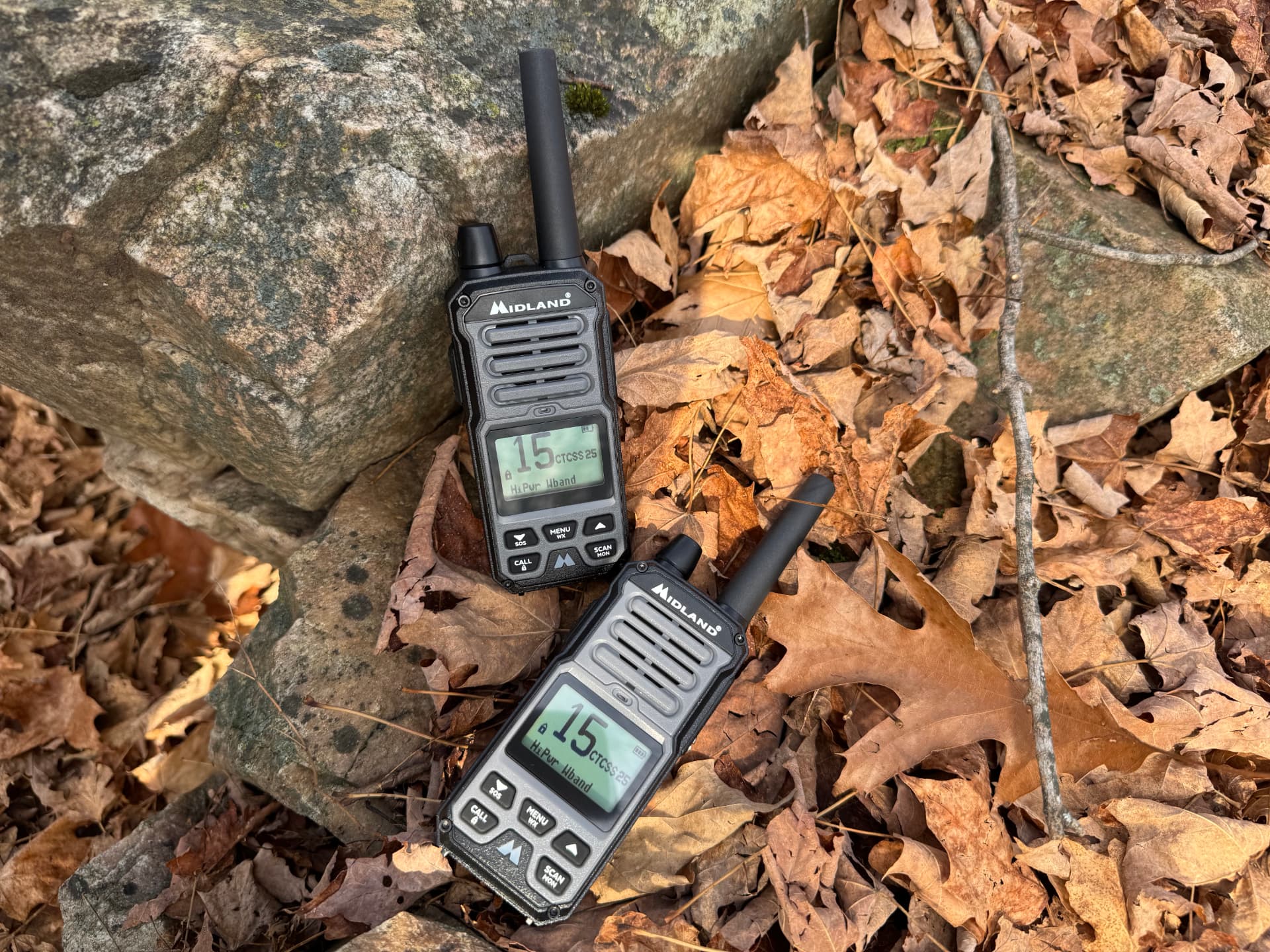
Communication is one of the most overlooked parts of emergency preparedness. We took Midland's GXT67 PRO GMRS radios into vehicles, homes, mountains, and dense woods to see how they perform when distance and terrain get in the way.
Affiliate link: we may earn a commission at no extra cost to you.
Shop Midland GXT67 PRO →INTRODUCTION
Communication is one of the most overlooked components of preparedness. We took Midland's GXT67 PRO radios into vehicles, homes, mountains, and dense woods to see how they perform when distance and terrain get in the way.
There is gear every prepared person should have that is simply a checkmark on a list, and then there is essential gear that is just plain cool. The GXT67 PRO is the latter.
Walkie-talkies are something every man loves. We all grew up holding various items to our mouths, pretending they were long-range radios, ending every phrase with "over" and "roger that."
As we get older, that love for these devices doesn't go away. But walkie-talkies are anything but toys.
They can be critical in a bugout bag, blackout plan, or a camping, overlanding, and hiking trip. As fun as radios are, they are also something your life may one day depend on. Choosing the right one shouldn't be taken lightly.
Today, we're putting the Midland GXT67 PRO GMRS two-way radios to the test.
PUTTING THE GXT67 PRO THROUGH ITS PACES
We tested a pair of Midland GXT67 PRO radios across several different environments:
- Enclosed vehicle to enclosed home across town.
- Separated by approximately one mile with steep hills between us.
- Two people moving in opposite directions on a ski mountain.
- Two miles of dense forest between radios.
These aren't controlled laboratory tests, and radio performance will vary depending on terrain, obstructions, antenna orientation, interference, and operating conditions. But they give us a useful look at how the radios perform in situations that actually matter.
Getting Set Up: Channels and Privacy Codes
Upon receiving the GXT67 PROs, we configured both radios to the same channel and privacy-code settings, using an appropriate power and bandwidth setting for the channel and our operating conditions.
The GXT67 PRO offers up to 99 channel selections, including:
- 22 standard GMRS/FRS channel positions.
- 8 GMRS repeater channels.
- 28 Midland preset privacy-code channels.
- Up to 49 user-programmable channel configurations.
It also offers 142 privacy codes, consisting of 38 CTCSS tones and 104 DCS codes.
For a family or group preparing for an emergency, having a common channel plan is important. You don't want to separate and discover that everyone has programmed their radios differently.
One important clarification: privacy codes do not encrypt conversations or prevent other people from listening. They simply filter which transmissions your radio plays through its speaker. Anyone monitoring the same frequency with their privacy code disabled can still hear your conversation.
Think of privacy codes as an interference-filtering feature, not communications security.
Establish your channel, tone, power setting, and radio procedures before separating. It sounds obvious, but the simplest preparation steps are often the ones overlooked.
Test 1: Enclosed Car to Enclosed Home
Our first test involved a scenario that could realistically happen during a prolonged power outage.
Imagine the grid goes down and one person needs to head into town for supplies while another stays home.
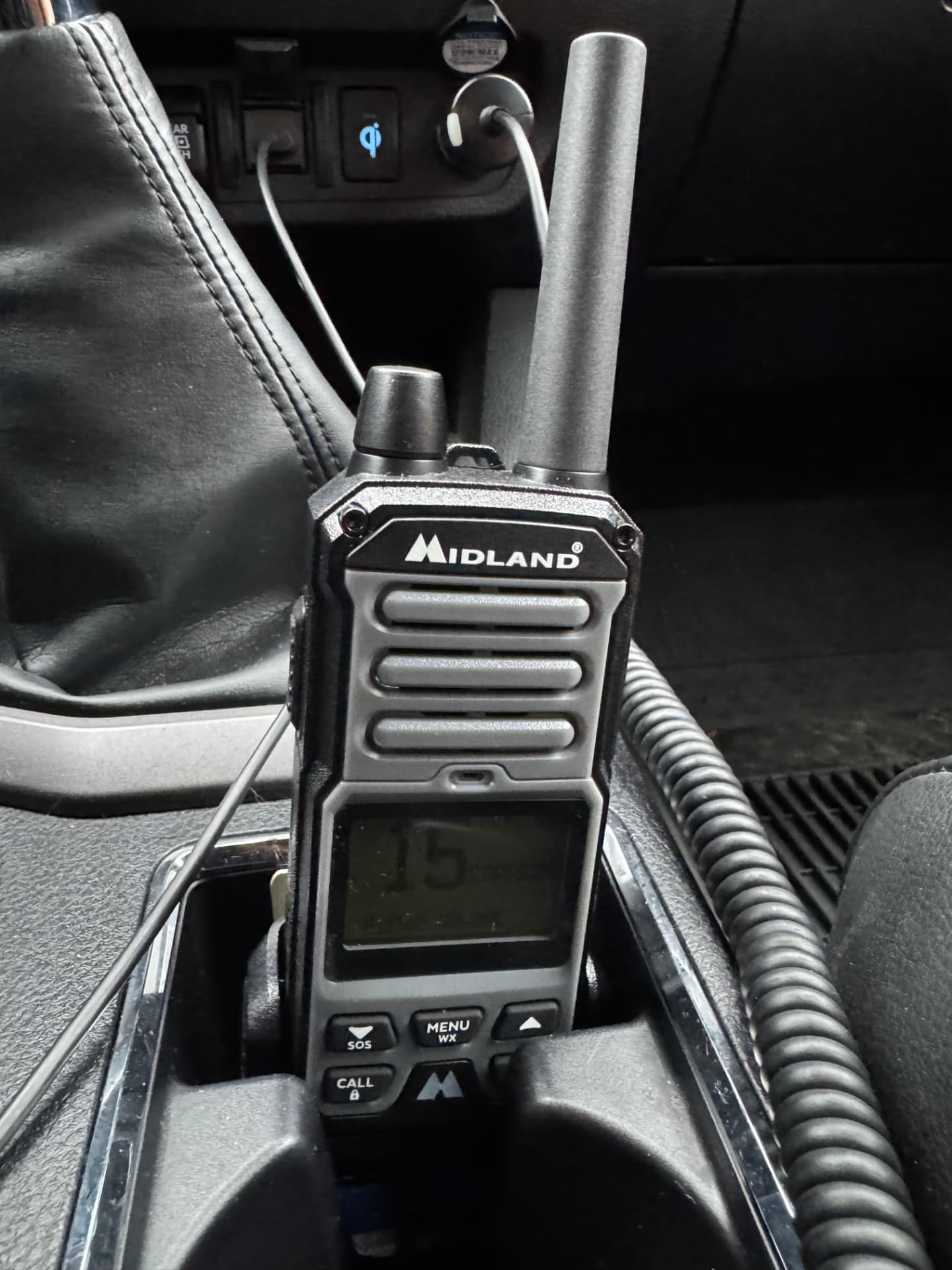
We tested the radios with one person inside a moving vehicle and the other inside a house. We were pleasantly surprised by the results.
We stretched the signal farther than expected, still receiving a faint signal at approximately four miles apart.
When we were within approximately one mile of each other, reception was crystal clear despite both radios being indoors and steep hills separating us.
That's a particularly encouraging result. Vehicles, buildings, and hills all introduce obstacles to radio communication. Being able to maintain a clear connection under those conditions is exactly what we wanted to see.
In more open conditions, you may achieve greater distances, but don't rely on advertised range figures. Test the radios in the actual terrain where you intend to use them.
Test 2: Ski Mountain
Next, we took the GXT67 PROs to a popular ski mountain and headed in opposite directions.
With a mountain ridge between us, we never lost our connection. We reached approximately one mile apart and could hear each other as clearly as if we were standing next to one another.
This is where terrain and elevation become interesting.
A mountain can block radio signals, but changes in elevation and available line of sight can also improve communication dramatically. The important takeaway is that the surrounding terrain matters just as much as the distance between two radios.
For hiking, skiing, camping, and outdoor groups, this is a useful demonstration of what handheld GMRS radios can do when properly positioned.
Test 3: Two Miles Through Dense Forest
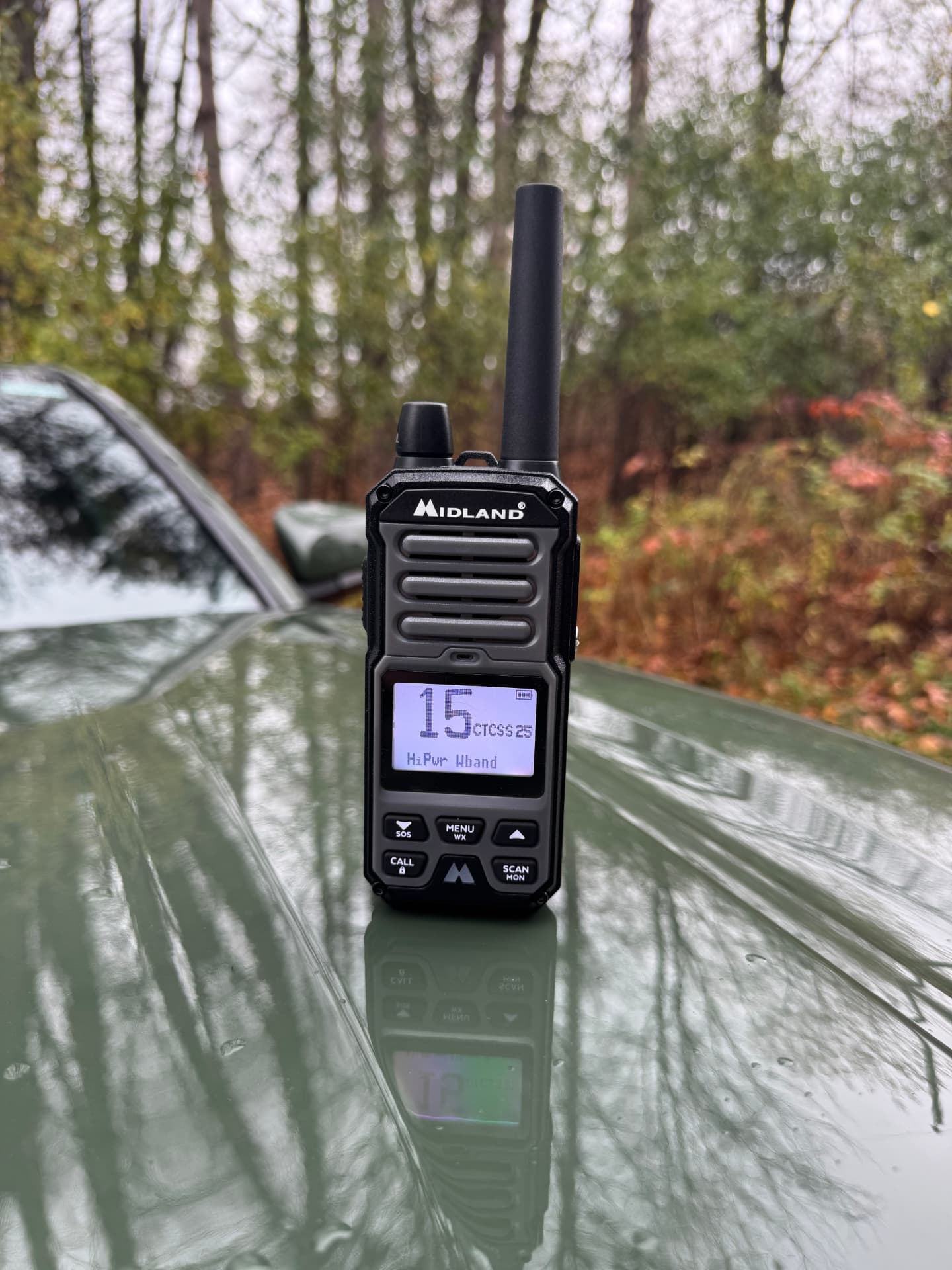
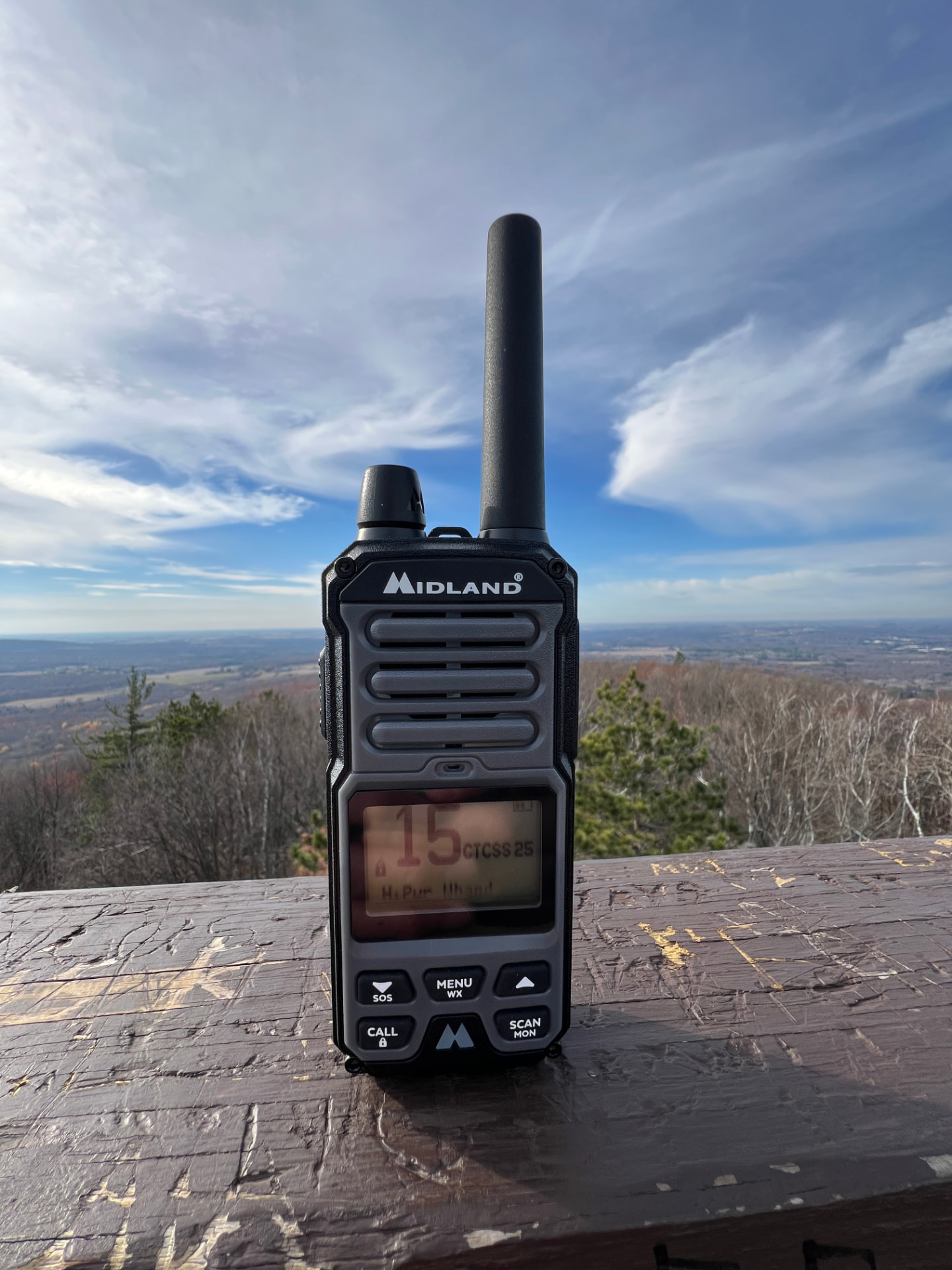
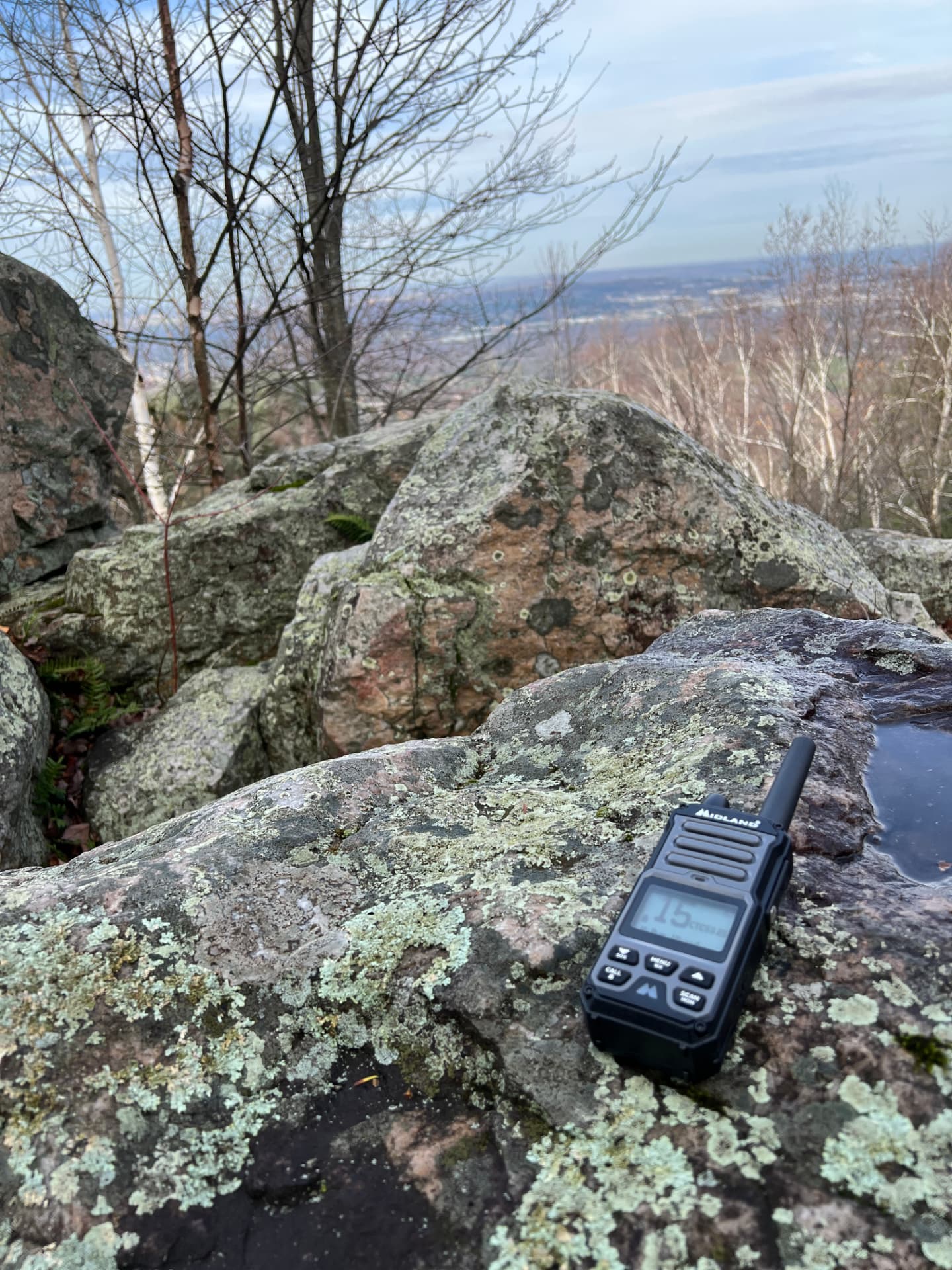
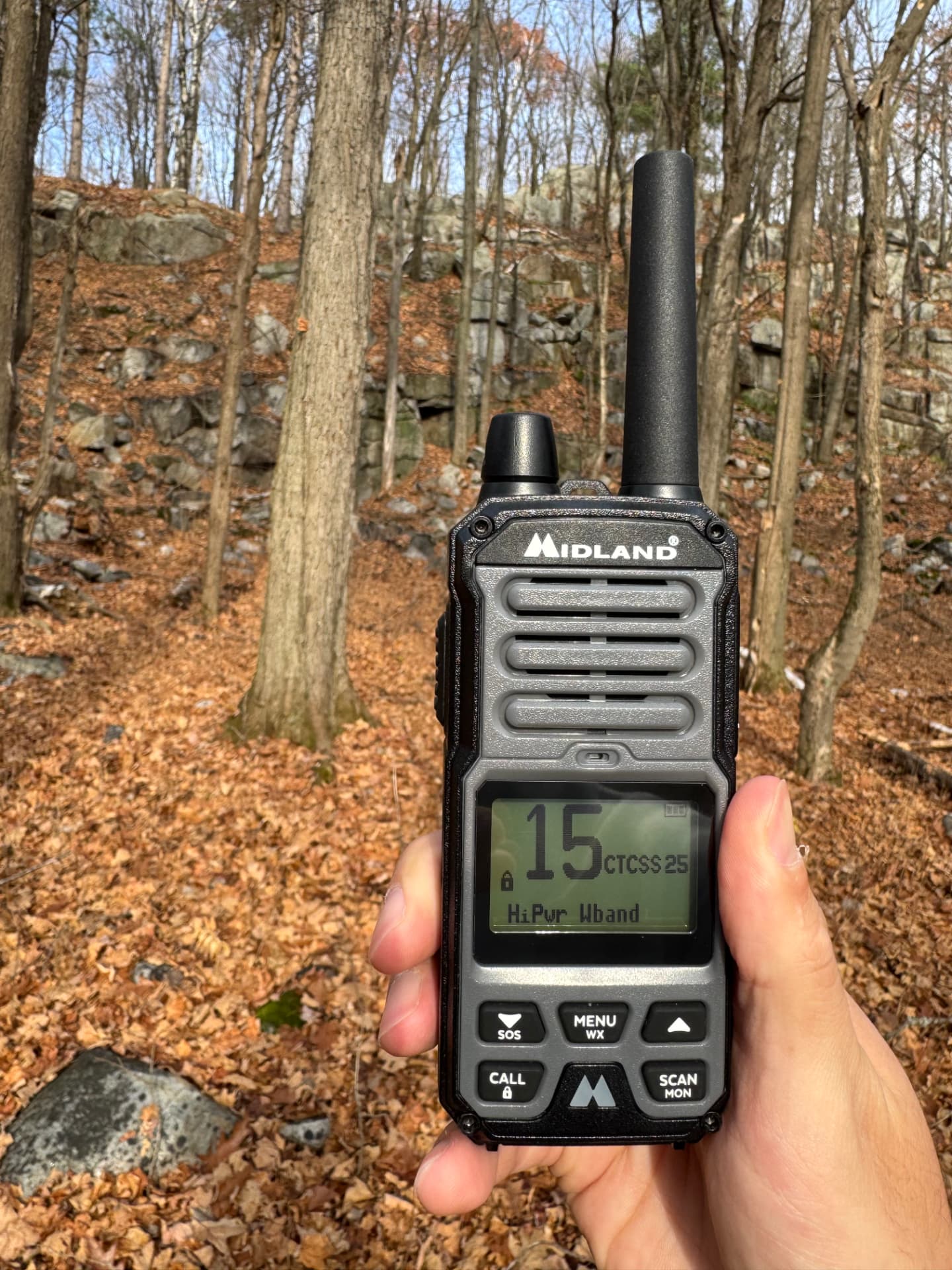
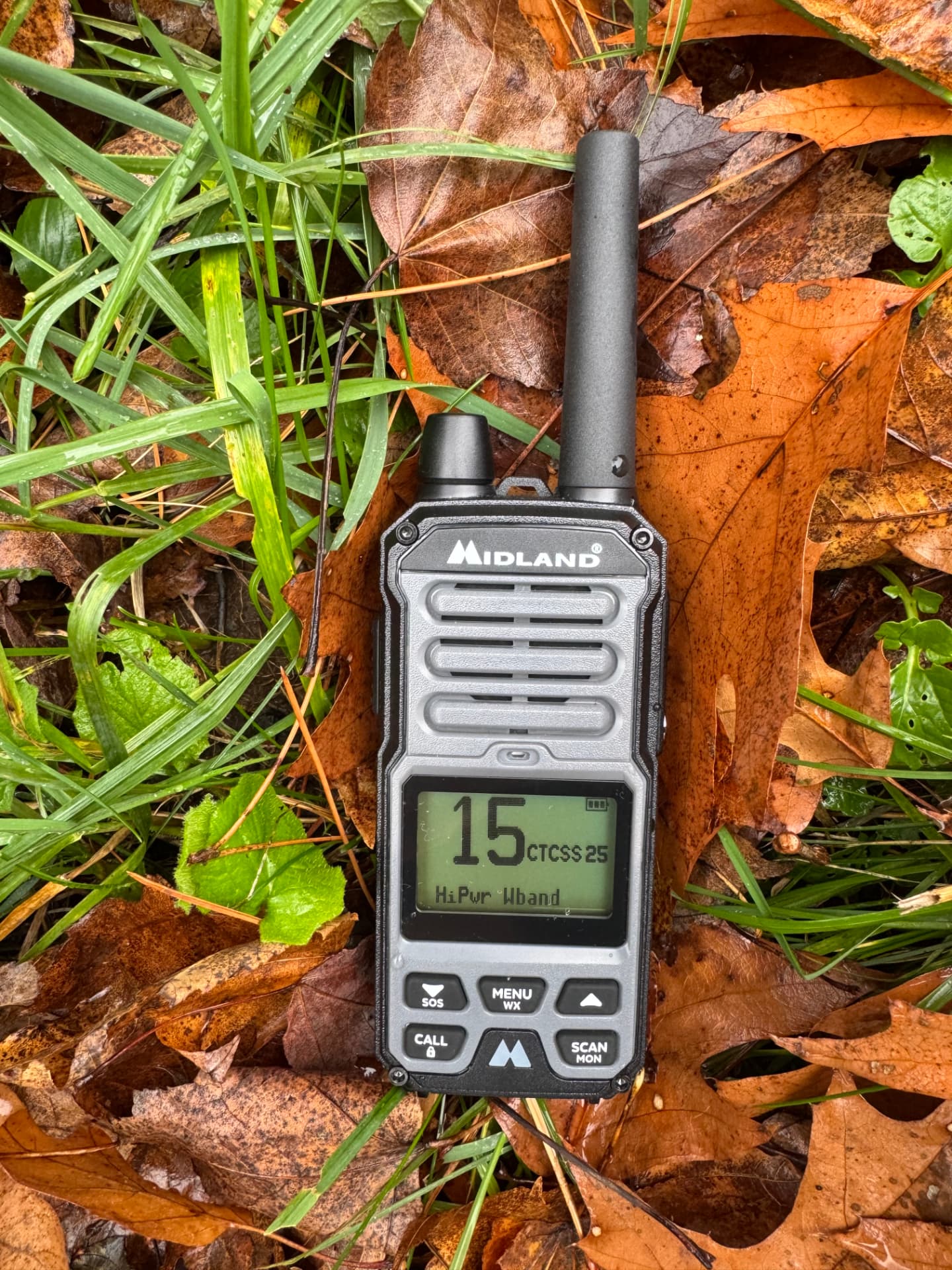
Our final test put approximately two miles of dense forest between the radios.
We had no issues maintaining communication.
Two miles of trees between handheld radios is a substantial real-world test. Dense vegetation can significantly affect UHF radio propagation, making this result particularly impressive.
For camping, hiking, and outdoor groups, dependable communication across wooded terrain can make a meaningful difference.
The GXT67 PROs really proved their worth in the woods.
THE TECHNICAL BREAKDOWN
The GXT67 PRO isn't simply a higher-powered version of the inexpensive walkie-talkies found at big-box retailers. It is a GMRS radio with repeater capability, multiple power settings, NOAA weather alerts, and a ruggedized enclosure.
Here's what makes it different.
5-Watt GMRS Transmission
The GXT67 PRO offers up to 5 watts of transmit power, with selectable high, medium, and low settings.
Higher transmission power can improve communication range, but it doesn't guarantee a specific distance. Antenna performance, terrain, interference, and line of sight all matter.
The ability to select power levels is useful. You don't necessarily need maximum power for every conversation, and lower settings can help conserve battery.
99 Channel Configurations and 142 Privacy Codes
The GXT67 PRO supports up to 99 channel selections, including standard channels, repeater channels, preset configurations, and user-programmable options.
Its 142 privacy codes consist of:
- 38 CTCSS tones.
- 104 DCS codes.
These codes help radios filter unwanted transmissions. They are not encryption, and they do not make conversations private.
Repeater Capability
One of the most useful features of the GXT67 PRO is its ability to communicate through GMRS repeaters.
A repeater receives a transmission and retransmits it from a higher or more strategically located antenna. This can extend communication beyond what two handheld radios can accomplish directly.
A repeater can be especially useful in mountainous or hilly areas where direct radio communication is obstructed.
You still need access to a compatible repeater, and its coverage depends on its location, antenna, configuration, and operating conditions.
NOAA Weather Radio and Alerts
The GXT67 PRO can tune into NOAA weather radio channels and receive NOAA weather alerts, giving you real-time updates as emergencies unfold.
This is extremely important, and it's something cheap walkie-talkies simply can't do. When a storm cell shifts, a wildfire changes direction, or a flash flood warning goes out, NOAA broadcasts that information continuously — and this radio lets you hear it without a cell signal, an internet connection, or a working power grid.
For camping, hiking, and emergency preparedness, that capability can be the difference between reacting early and being caught off guard. Receiving alerts as they're issued helps you make decisions before conditions deteriorate.
A handheld radio that combines two-way communication with live weather information provides another critical layer of redundancy.
It should complement, not replace, other official emergency weather information sources.
Battery Life and Charging
Midland advertises up to four days of battery life under its stated usage conditions. Midland’s launch announcement also lists a 16-hour battery-life figure under a 5% receive, 5% high-power transmit, and 90% standby usage cycle.
These figures should not be interpreted as guaranteed continuous transmit time. Actual runtime depends heavily on transmit frequency, power setting, reception, standby time, and environmental conditions.
The GXT67 PRO uses a built-in rechargeable 2,500mAh lithium-ion battery.
Charging options include:
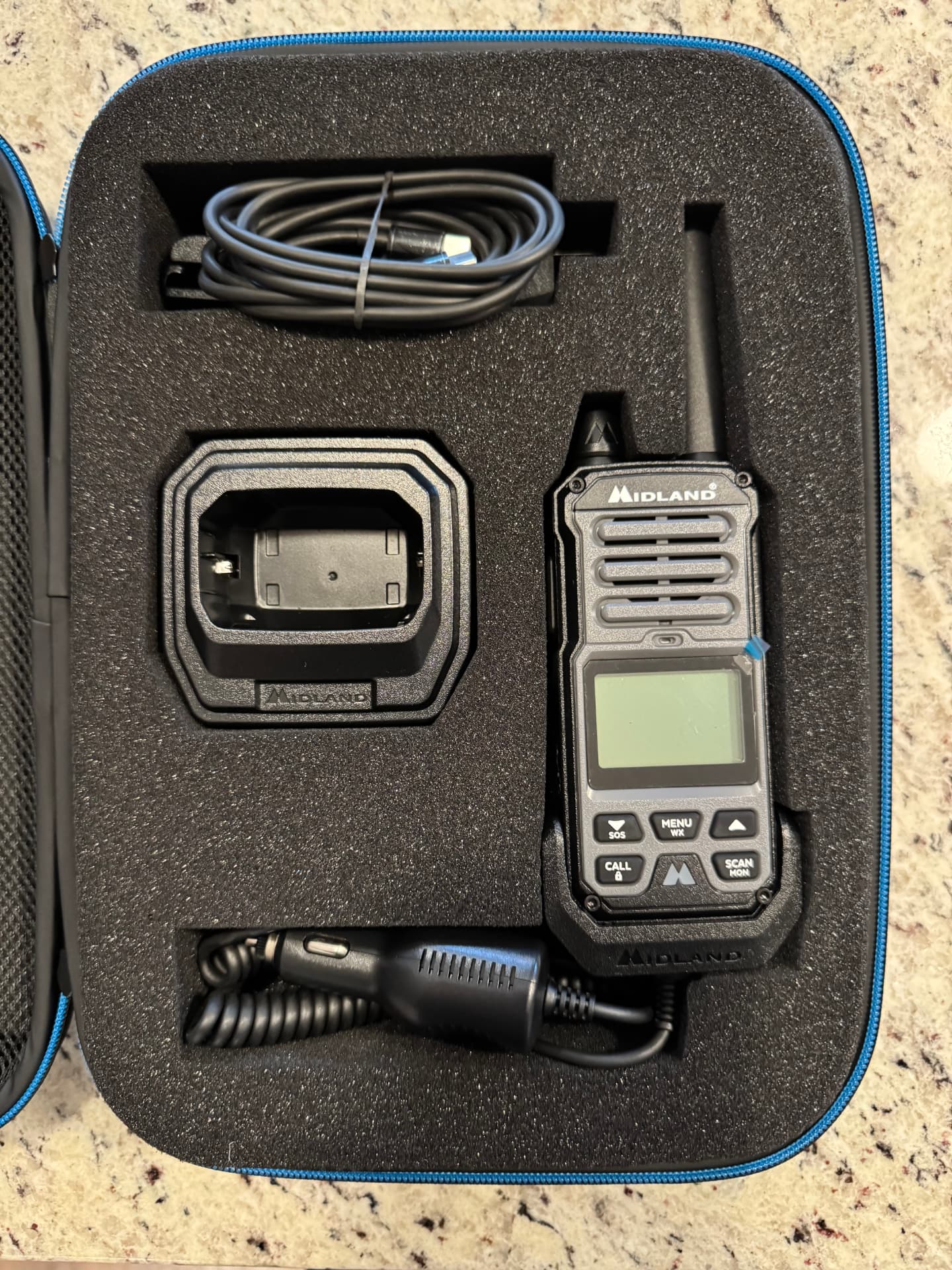
- USB-C charging.
- Desktop charging dock.
- Included vehicle charging adapter.
VERIFIED SPECIFICATIONS
Manufacturer claims below are not measured results from our field test.
| Feature | Published specification |
|---|---|
| Transmit power | Up to 5 watts; high, medium, and low settings |
| Channel selections | Up to 99 selections/configurations; not 99 distinct GMRS frequencies |
| Privacy codes | 142: 38 CTCSS and 104 DCS; not encryption |
| Repeater capability | GMRS repeater channels; compatible repeater access required |
| Weather information | NOAA weather radio and alerts |
| Enclosure | Manufacturer-rated IP67; no destructive durability test claimed |
| Battery | Built-in rechargeable 2,500mAh lithium-ion battery |
| Charging | USB-C, desktop dock, and vehicle charging adapter |
| Battery life | Up to four days advertised; launch announcement also gives 16 hours at a 5/5/90 duty cycle |
Runtime and range depend on operating conditions. Neither manufacturer figures nor our reported distances guarantee performance in another location.
GMRS LICENSING AND LEGAL CONSIDERATIONS
In the United States, obtain an FCC GMRS license before transmitting with this radio. GMRS and license-free FRS are different services, even where channel frequencies overlap. Follow applicable channel, power, bandwidth, and repeater rules. Privacy codes are not encryption.
A radio cannot guarantee contact with emergency services. Establish a household channel plan and test it in your actual terrain. NOAA reception complements other official alert sources; local two-way communication also requires compatible radios and a legal operating plan.
The author’s personal ratings reflect hands-on use, not laboratory measurements.
The Midland GXT67 PRO earned 4.9/5 in our Field Test.
Shop Midland GXT67 PRO →