For about three decades, guests walked to weddings and conferences through a wing of a luxury resort that had been built, in part, to hide the place where Congress would have gone after a nuclear attack.
There's a bunker under the hotel
The Greenbrier is a historic resort in White Sulphur Springs, West Virginia. Beneath its West Virginia Wing sits a former Cold War emergency relocation facility built for the United States Congress.
Construction began in the late 1950s, and the facility was maintained for decades. The public knew the resort — its golf, its lobbies, its guest list. Very few people knew what was underneath it.
The Greenbrier's own account is blunt about how that worked. As the resort states on its official bunker tours page: “In 1958, Congress instructed The Greenbrier to build our West Virginia Wing to conceal the construction of an emergency Cold War fallout shelter and relocation facility for Congress.”
Project Greek Island
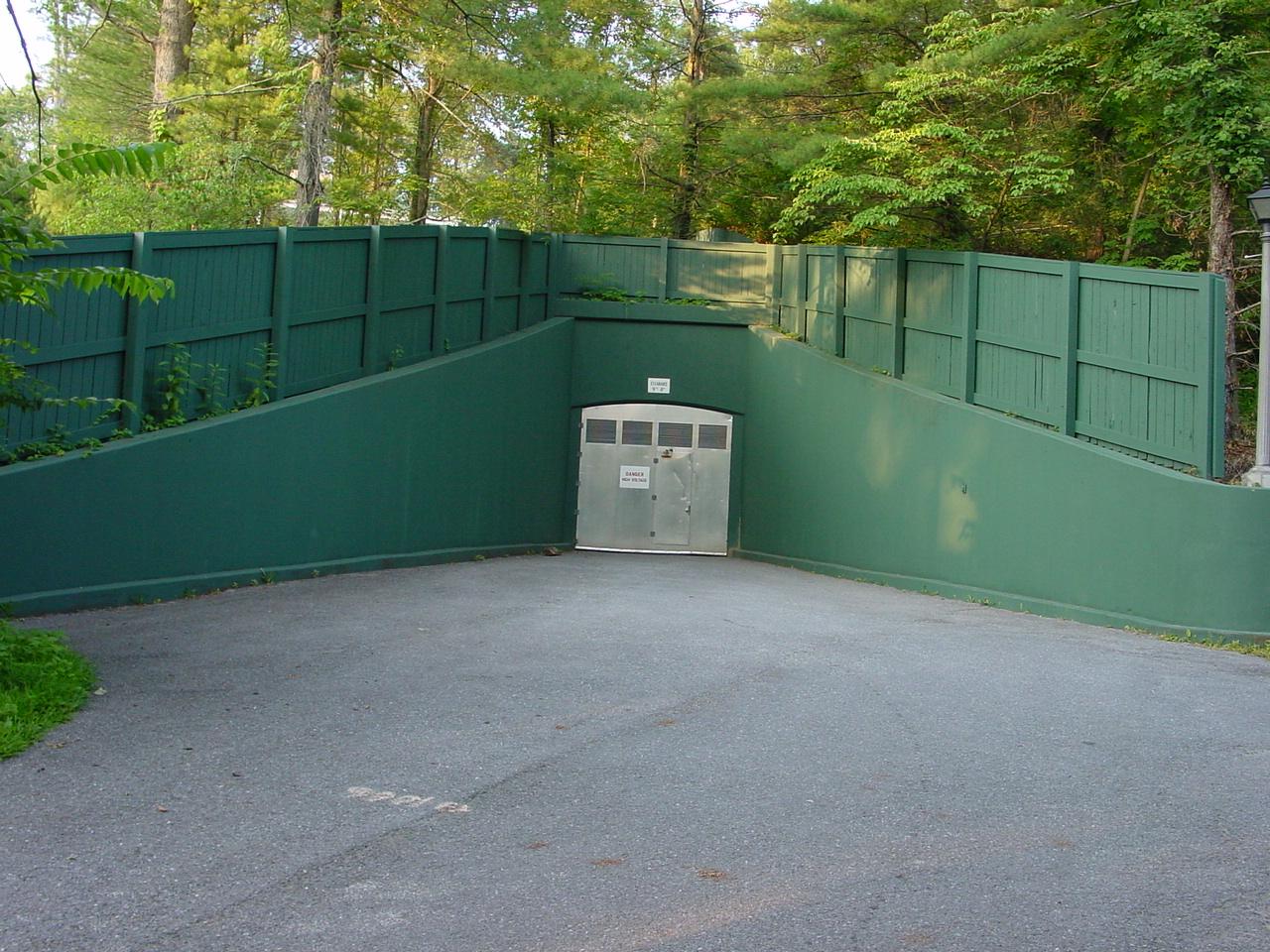
The facility was built during the Cold War as an Emergency Relocation Center for Congress, associated with the code name Project Greek Island. The Greenbrier's official history describes the government enlisting the resort's help to construct “an underground bunker codenamed Project Greek Island — designed to house the U.S. Congress during times of conflict,” a project that included adding the West Virginia Wing above ground.
The premise was simple. If Washington, D.C. were rendered unusable during a nuclear attack, the federal government would need somewhere else to continue operating.
That distinction matters, and it's worth stating plainly: this was not a private survival retreat. It was a continuity-of-government facility. Its purpose was institutional, not personal — keeping the legislative branch functioning, not keeping a family comfortable.
Why the Greenbrier?
Per Smithsonian Magazine, officials chose the resort for its isolated location and its long relationship with the federal government. Taken together, the site offered several useful characteristics:
- Relative isolation in the Allegheny Mountains
- Distance from Washington, D.C. — far enough to be outside the capital, close enough to reach
- Existing resort infrastructure already built to house and feed large numbers of people
- A long-standing relationship between the resort and political figures
- A large existing facility, and an active expansion, that could conceal the construction
The Greenbrier is roughly a four-hour drive from Washington, D.C. Beyond that, we'd rather not speculate: the strategic reasoning documented by reliable sources is about isolation, access, and existing relationships, and we're not going to invent more.
Building a secret under a resort
This is the part that still seems improbable. The bunker was concealed beneath the construction of the resort's West Virginia Wing — an above-ground addition that gave the whole operation a cover story people could see with their own eyes.
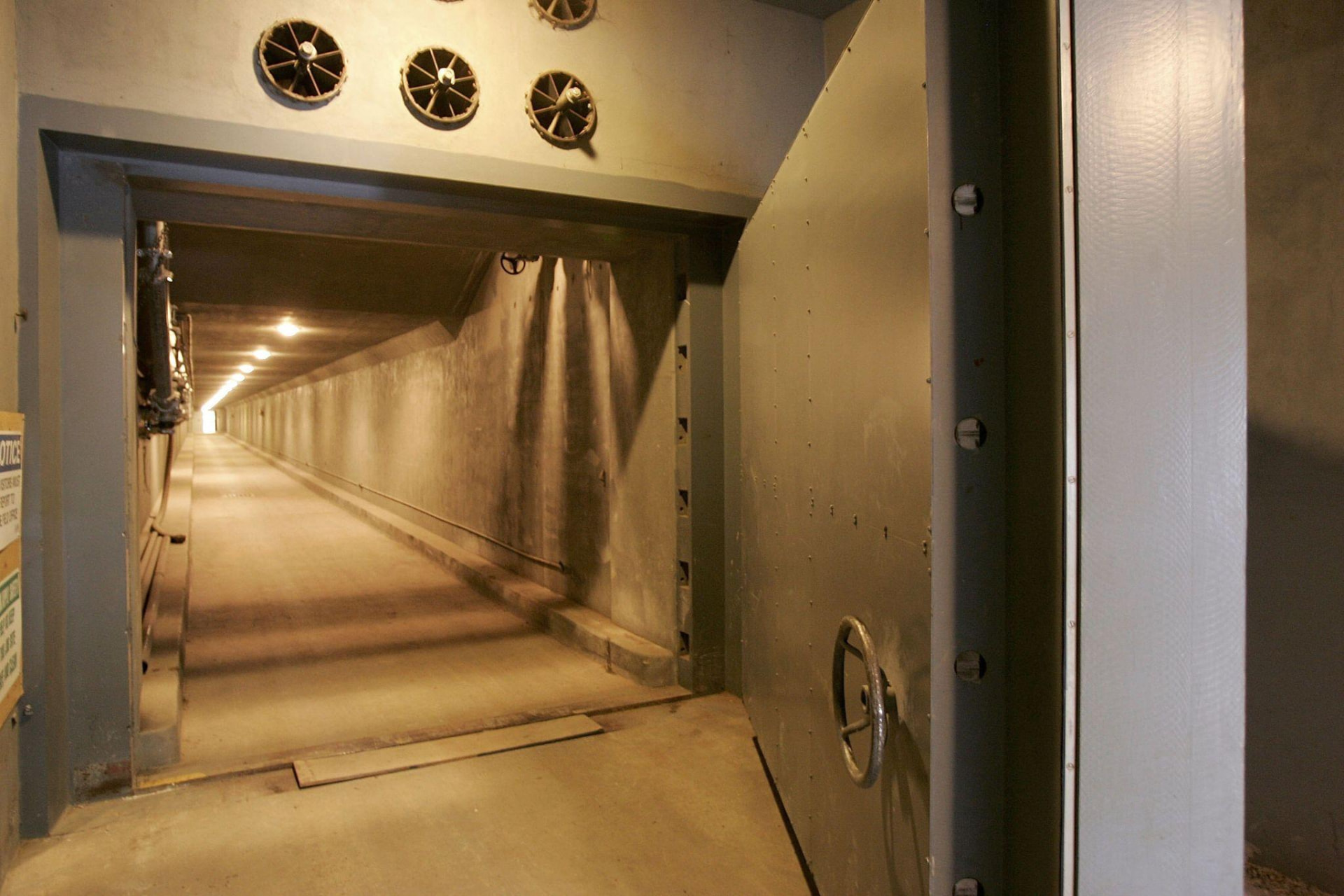
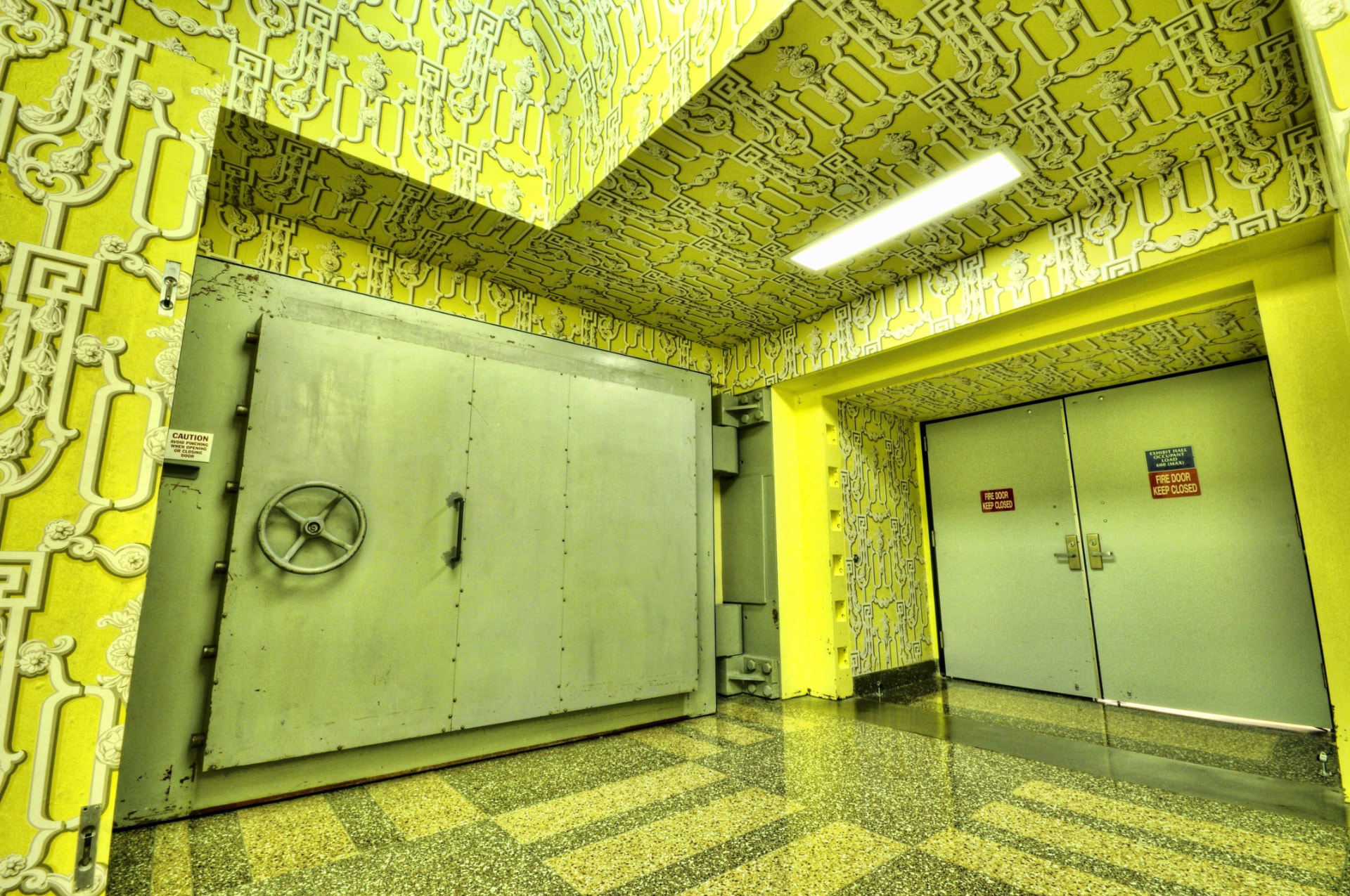
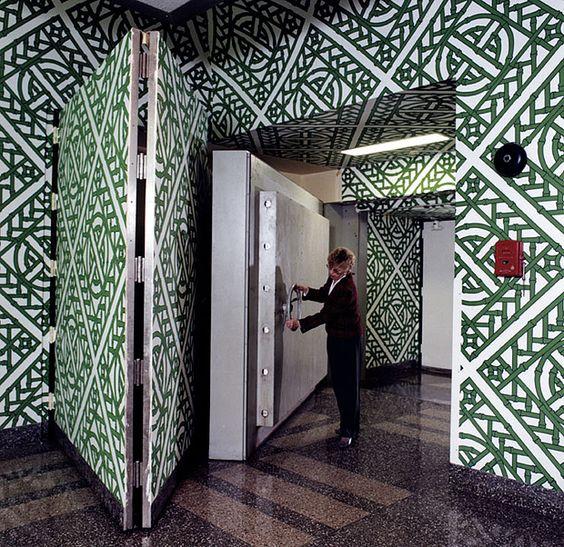
Smithsonian describes the scale that made the cover story hard to maintain: an enormous foundation hole, vast amounts of concrete arriving daily by truck, guards posted outside, and deliveries that made no sense for a conference wing, including 110 urinals and huge steel doors. The finished facility sits roughly 720 feet underground, behind a blast door the same reporting describes as weighing 25 tons.
The documented elements of the facility read like a list of everything a building normally gets from the outside world:
- Heavy blast doors at the entrances
- Large underground spaces, including an exhibit hall used openly by guests
- Chambers designated for both houses of Congress
- Dormitories with more than 1,000 bunk beds
- A 400-seat cafeteria and food service
- Substantial water storage tanks
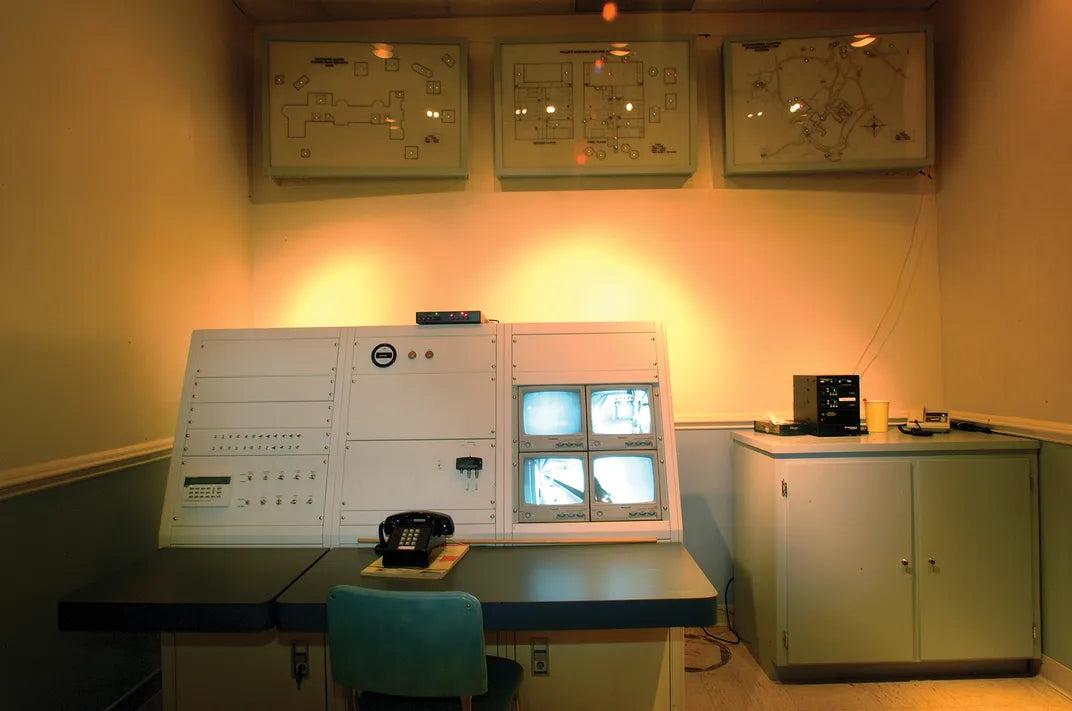
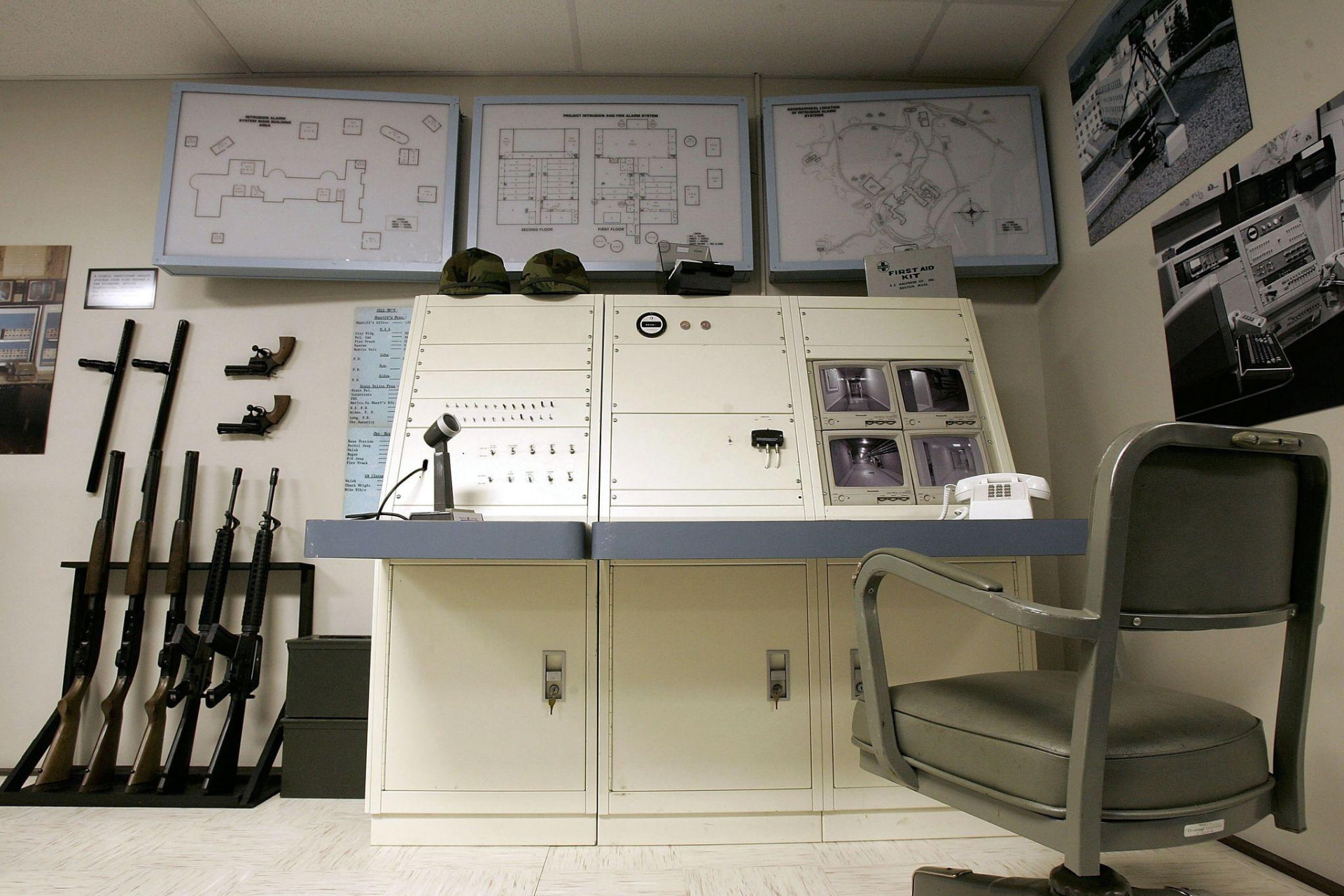
- Communications infrastructure
- Power infrastructure, including emergency generation
- Waste management, including an incinerator
These are historical infrastructure details, documented by the resort and by reporting on the facility. They're interesting as history, not as a shopping list. Nothing in this section is survival advice.
A government underground
The facility was designed to accommodate the entire United States Congress — not a selected few. What that required, room by room, is the most revealing thing about it.
The House of Representatives. Governor's Hall would have served as the House chamber. The Greenbrier's official venue page states that the room “would have served as the chamber for the U.S. House of Representatives had the bunker ever been activated,” and that it holds theater-style seating for 326 today.
The Senate. The Mountaineer Room was designated as the prospective Senate chamber. Per The Greenbrier, “the Mountaineer Room was designated as the prospective U.S. Senate chambers if the facility had been activated.” It seats up to 97 theater-style today.
Living quarters. The facility contained more than 1,000 bunk beds, per Smithsonian.
Food. The same reporting documents a 400-seat cafeteria capable of feeding occupants in shifts.
Water. The bunker held vast water tanks — a sealed facility can't assume a municipal supply will still be pressurized.
Communications. The facility included communications infrastructure intended to support government operations. Legislating requires more than surviving; a chamber nobody can hear from isn't a government.
Power. Everything above depends on electricity. Underground, there is no daylight, no natural ventilation, no gravity-fed anything. Air handling, water pumps, refrigeration, lighting, and communications all run on power, which is why emergency generation was part of the design rather than an accessory to it.
We've deliberately left out generator capacity, fuel duration, and redundancy figures. Numbers like those circulate widely, and the primary sources we can verify don't state them. We'd rather have a shorter list that's accurate.
It had to work without the outside world
The bunker wasn't simply a large underground room with supplies in it. It was an attempt to recreate enough critical infrastructure that government operations could continue when normal infrastructure was unavailable.
Which meant the designers had to account for all of it at once: power, water, food, communications, shelter, waste, sleeping arrangements, medical needs, and the actual mechanics of governing.
That's our observation rather than a historical claim, but it's the one we'd carry out of this story. A reinforced room with no power is a dark reinforced room. A stocked pantry with no water is a problem deferred. What made this facility a facility was the dependency chain behind the concrete.
The secret lasted 30 years
The facility remained secret from the public for roughly three decades — kept in a state of readiness while the resort operated normally above it. Smithsonian puts the span of concealment at 1958 to 1992.
It was exposed in 1992 by Washington Post investigative reporter Ted Gup. The Greenbrier's own bunker tours page identifies that article — “The Last Resort,” published May 31, 1992 — as the story that “exposed The Bunker and led to its declassification.”
The secrecy wasn't maintained by technology. It was maintained by people. Smithsonian reports that within weeks of the groundbreaking, locals could tell the new wing held more than guest rooms — the foundation hole was too big, the concrete deliveries too constant — and simply kept their suspicions to themselves. One resident who grew up nearby, Ann Tate Bell, told the magazine: “Everyone just agreed to be in on the secret.”
There's no need to dramatize that. The remarkable part is only this: a facility of this size, in a small town, stayed quiet for thirty years because a lot of ordinary people decided not to say anything.
The bunker today
The bunker is no longer an operational secret government facility. It's now open to the public as a historical attraction at The Greenbrier, and it's listed among the resort's activities.
According to the resort's official bunker tours page, as of this writing:
- Tours are available to the public, and reservations are required
- The tour runs approximately 90 minutes
- Maximum tour size is 25 persons
- No one under the age of 10 is permitted
- No cameras, electronic equipment or cell phones are permitted
- Backpacks, purses, tote bags and other items of concealment are not permitted
Tour details, pricing and closure dates change, so treat the resort's page as the authority rather than this article.
Cameras are prohibited on the public tour, so visitor photography of the interior is rare. The images in this article were supplied directly to Apocalypse Warehouse for publication. For the resort's own official imagery, see The Greenbrier's bunker tours page.
What the bunker got right
Here's the takeaway we'd argue for: preparedness is about systems, not stuff.
This facility wasn't simply stocked with supplies. It was designed around dependencies. Power had to continue. Water had to remain available. People had to eat. People had to sleep somewhere. Waste had to be managed. Information had to move. The institution had to be able to communicate and operate.
That's a useful way to think about preparedness at any scale. You don't need a facility measured in acres of concrete. But you should be able to answer, without guessing, what your own household depends on — and what happens to each of those things when the supply stops.
If you've never mapped that out, our Preparedness Assessment works through it dependency by dependency, and the Homestead Simulator shows how those dependencies behave over time rather than on day one.
What it got wrong
It's worth being measured here. The bunker wasn't a failure — it was built for a specific Cold War scenario and a specific threat model, and that scenario never arrived.
But modern emergencies are different, and most households are far more likely to face:
- Extended power outages
- Severe storms
- Wildfires
- Flooding
- Extreme heat or cold
- Infrastructure failures
- Supply disruptions
- Regional disasters
The lesson isn't that everyone needs a bunker. It's that preparedness should begin with understanding the threats and dependencies that actually apply to where you live — not the most dramatic scenario available.
The bottom line
The Greenbrier bunker was built for one of the most extreme scenarios imaginable. But its most useful lesson isn't about nuclear war. It's about dependencies.
The people who designed it had to ask a question that has nothing to do with the Cold War: how do you keep people alive, and an organization functioning, when the normal systems disappear?
That is the same fundamental question behind everyday preparedness. And the answer doesn't have to involve a bunker. It might mean having water. Backup power. Food. A way to communicate. A plan for leaving. A plan for staying. And knowing what your household actually depends on.
Go See It
Tours, pricing, policies and current closure dates are published by the resort.